
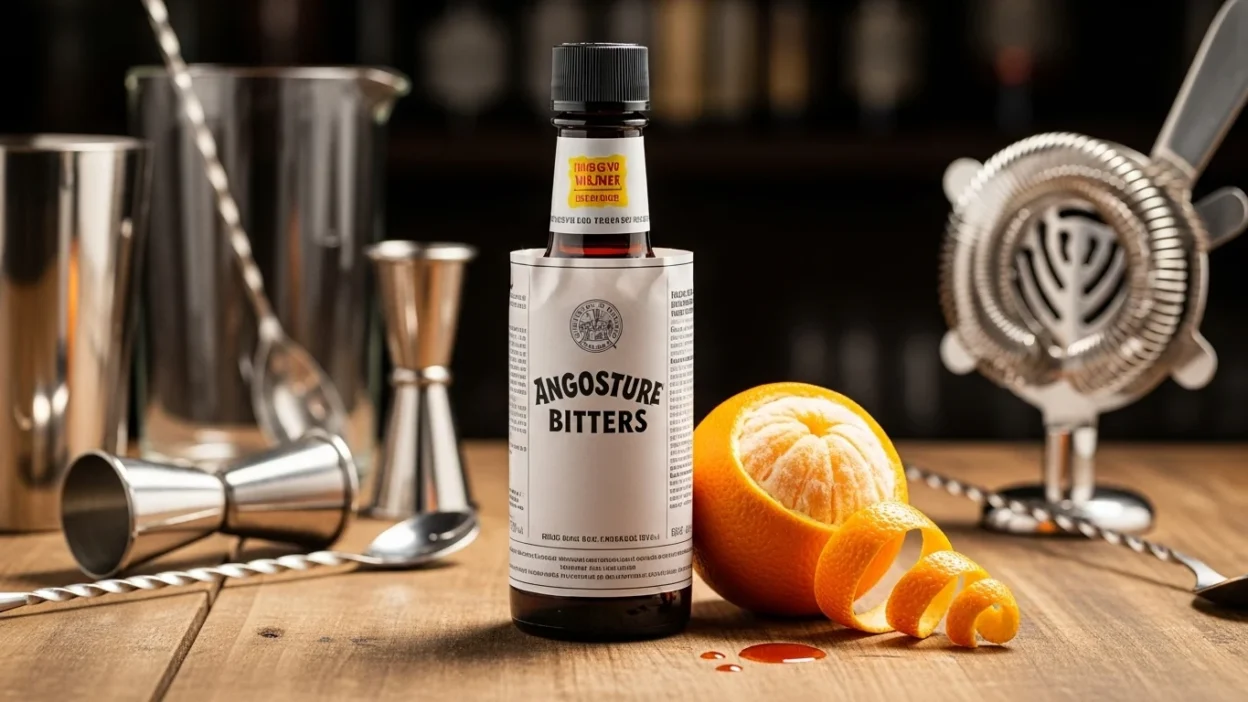
A homemade angostura bitters recipe is surprisingly simple to make—and it’ll save you a fortune compared to store-bought bottles. You’re looking at just $2–3 in ingredients and about three weeks of hands-off infusion time to create something that tastes virtually identical to the $12–15 premium versions sitting behind craft cocktail bars.
Whether you’re mixing Old Fashioneds every weekend, experimenting with classic cocktails at home, or just tired of dropping cash on tiny bottles, this DIY solution is a game-changer. The real magic? You’ll have complete control over every spice, botanical, and flavor note—plus you’ll understand exactly what’s going into your drinks. Let’s dive into how to make this aromatic, bitter-sweet elixir from scratch.
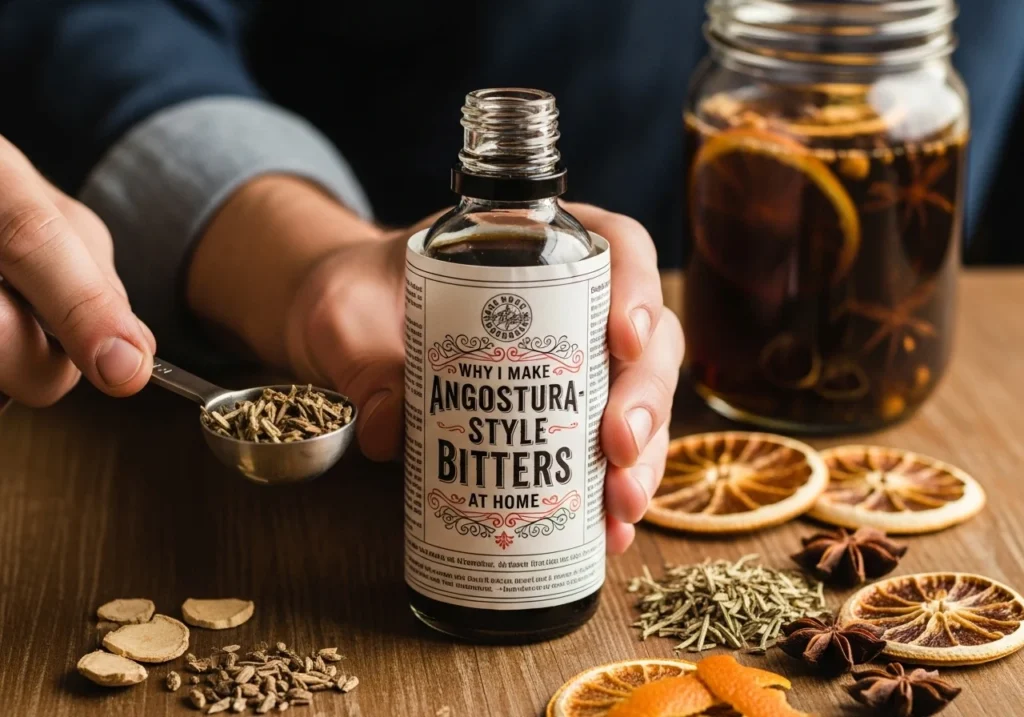
Why Make Angostura Bitters at Home?
- Save 75–80% on cost: Homemade runs $2–3 per batch vs. $12–15 retail. One batch yields enough for a year of cocktails.
- Customize every ingredient: Adjust spice intensity, skip allergens, or swap botanicals to match your taste preferences exactly.
- No artificial additives: You control what goes in—no mystery ingredients, preservatives, or colorants.
- Impress guests and fellow bartenders: Homemade bitters are a conversation starter and proof of your craft cocktail credentials.
- Perfect for gifting: Bottle your batch in small jars with custom labels for a thoughtful, gourmet gift that costs pennies to make.
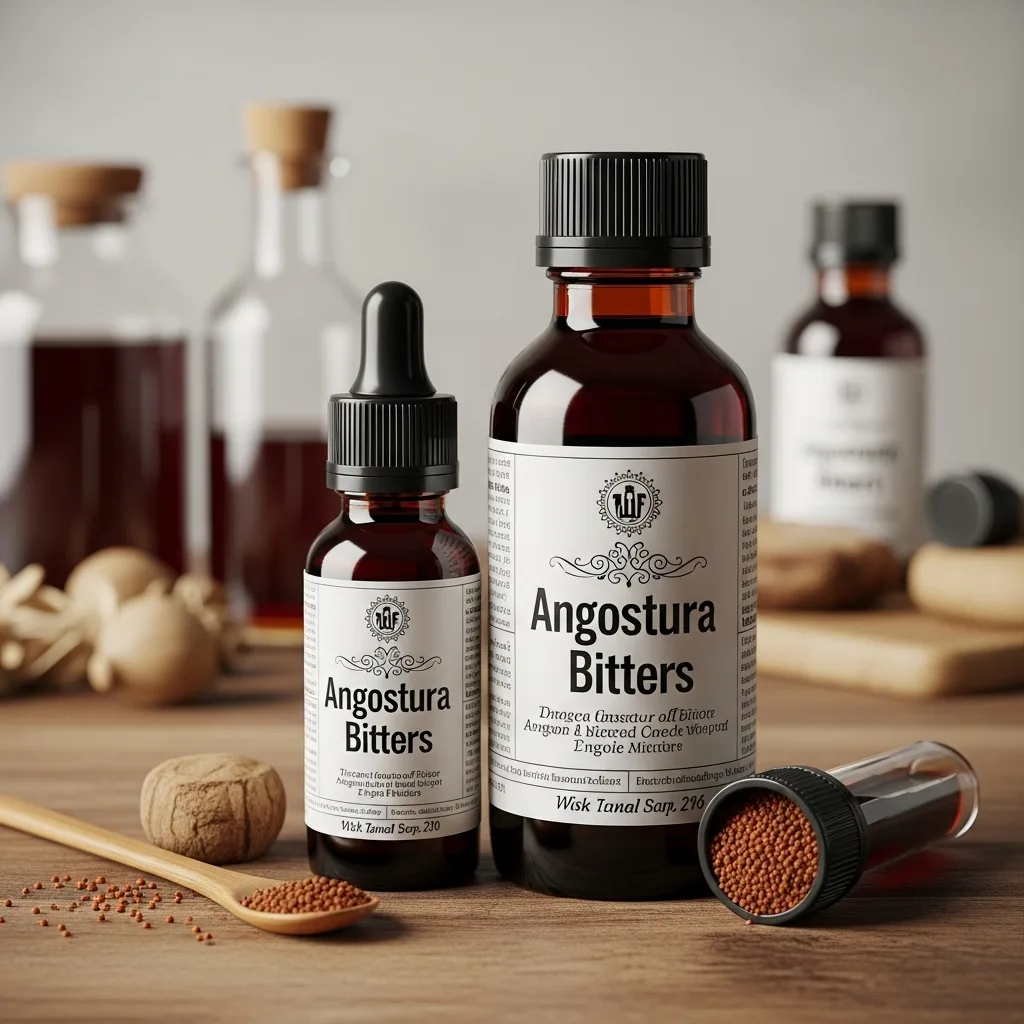

Homemade Angostura Bitters
Ingredients
Equipment
Method
- Load a clean pint jar with measured botanicals (gentian, quassia, cinchona, cardamom, cinnamon, cloves, orange peel, vanilla).
- Load a clean pint jar with measured botanicals (gentian, quassia, cinchona, cardamom, cinnamon, cloves, orange peel, vanilla).
- Seal jar tightly and shake well.
- Store in a cool, dark place and shake once daily for 14 days.
- After 14 days, strain the alcohol infusion through cheesecloth into a clean container. Set aside the liquid.
- Reserve the spent botanical solids for water extraction.
- Place spent solids in a nonreactive saucepan and add 2 cups water
- Bring to a boil, then reduce heat to low.
- Cover and simmer gently for 5-10 minutes.
- Transfer the water and solids to a quart-size jar.
- Seal and let rest for 5-7 days, shaking daily.
- Fine-strain the aromatic water through cheesecloth and coffee filter.
- Combine equal parts alcohol infusion and aromatic water in a clean container. (If using 100-proof vodka, use only half as much water.)
- Make rich simple syrup: Combine 2 cups turbinado sugar with 1-1.5 cups water, heat until dissolved. OR dissolve 1/3 cup caramelized sugar in hot water.
- Add sweetener to taste, starting conservatively (about 2-4 tablespoons per cup of mixture).
- Fine-strain the complete mixture through coffee filter.
- Funnel into 1-oz amber dropper bottles.
- Label with batch date.
- Let rest 2-3 days before using to allow flavors to marry.
Video
Notes
- Orange-Spice: Increase dried orange peel to 4 tablespoons
- Coriander-Lime: Add 1 tablespoon coriander seeds, swap lime peel for orange
- Lavender-Citrus: Add 1 tablespoon lavender buds, use lemon peel
Why Make This at Home?
- Massive savings: Pay $2–3 instead of $12–15 per bottle, and one batch makes enough for months of cocktails.
- Full customization: Adjust spice intensity, sweetness level, and botanical blends to match your exact taste preferences.
- Fresher ingredients: Use premium whole spices and botanicals you choose yourself—no mystery additives or preservatives.
- Impressive cocktail skills: Impress friends and fellow home bartenders with your craft-level knowledge and homemade bitters.
- Passive infusion: Just mix, seal, and wait—no active cooking or complicated steps required, perfect for busy schedules.
Homemade vs Original — Side by Side
| 🍾 Original Angostura | 🏠 Homemade Version | |
|---|---|---|
| Cost Per Bottle | $12–$15 | $2–$3 |
| Prep Time | None (ready to use) | 20 minutes active + 20 days infusing |
| Shelf Life | 10+ years unopened | 6–12 months (refrigerated) |
| Customization | Fixed formula | Fully adjustable spices & botanicals |
| Ingredient Transparency | Proprietary blend | You control everything |
Tips, Tricks & Variations
Pro Tips
- Use a dark glass jar: Store your infusion in an opaque or dark glass container away from direct sunlight to preserve the botanical flavors and prevent degradation.
- Strain through cheesecloth twice: First strain removes large solids; second strain (through fine cheesecloth or coffee filters) gives you a crystal-clear, professional-looking bitters.
- Shake daily for the first week: Gently agitate the jar once or twice daily during the first 7 days to accelerate flavor extraction and ensure even infusion.
- Taste-test at day 15: Check the flavor profile halfway through infusion—if it’s already perfect, you can strain early rather than waiting the full 20 days.
Easy Variations
- Spiced Bitters: Add extra cinnamon stick, clove, and nutmeg for a warmer, dessert-cocktail version perfect for fall drinks.
- Orange Bitters: Substitute dried orange peel for half the cardamom and add a touch of orange extract for a citrus-forward twist.
- Low-Sugar Version: Reduce the simple syrup by half or use a sugar substitute like monk fruit to cut sweetness while maintaining body.
- Gentian Root Boost: Increase gentian root by 50% for an extra-bitter profile that cuts through rich, spirit-forward cocktails.
Storage & Make-Ahead Tips
Store your finished homemade angostura bitters in a cool, dark cupboard or refrigerator in a sealed glass bottle—they’ll keep for 6–12 months refrigerated, or up to 3 months at room temperature. Make a double or triple batch and store in small dropper bottles for easy gifting or long-term use. You can prepare the spice blend and alcohol base up to a week ahead; just combine them when you’re ready to start the infusion clock.
Frequently Asked Questions
Can I speed up the infusion process?
Yes, but with trade-offs. Gently warming the jar (not boiling) for 1–2 hours can accelerate extraction, but you’ll lose some delicate aromatic notes. For best results, stick with the 20-day cold infusion method. Alternatively, taste-test at day 10–15 and strain early if the flavor is already where you want it.
What if I don’t have all the botanicals listed?
This recipe is flexible. The core flavors come from gentian root, cardamom, and clove—those are non-negotiable. For the rest, substitute similar spices you have on hand: cinnamon for nutmeg, star anise for fennel, or dried citrus peel for any missing aromatics. The result will taste slightly different but still delicious.
How long does homemade bitters last?
Refrigerated in a sealed glass bottle, homemade angostura bitters will keep for 6–12 months. The high alcohol content acts as a preservative, but over time the flavors will fade. For best taste, use within 6 months. If stored at room temperature in a cool, dark place, consume within 3 months.
Can I make this without alcohol?
Not recommended. The alcohol (typically high-proof vodka or grain spirit) is essential for extracting the botanical flavors and preserving the bitters. A non-alcoholic version would require glycerin-based extraction and won’t have the same shelf life or flavor intensity.
Why Make Your Own Aromatic Angostura Bitters?
Store-bought bitters are convenient, but making your own gives you complete control over flavor, strength, and balance. Plus, the process is surprisingly straightforward—no fancy equipment required.
What you’ll gain:
- Custom flavor profiles tailored to your favorite cocktails
- Significant cost savings (one batch costs $10-15 vs. $8-12 per commercial bottle)
- Pride in crafting an essential cocktail ingredient from scratch
- The ability to create unique variations you can’t buy anywhere
The technique uses simple infusion and extraction methods that bartenders have relied on for generations. You’ll work with high-proof spirits to pull maximum flavor from your botanicals, then balance everything with water and a touch of sweetness.
Essential Ingredients for Angostura Bitters
The magic happens when you combine three categories of ingredients: bittering agents, warming spices, and brightening aromatics.
Bittering Backbone
These create the foundation of any Angostura bitters recipe:
Gentian root (2-3 tablespoons): The workhorse of the bitters world. Provides clean, earthy bitterness without harshness.
Quassia chips (1-2 tablespoons): Adds a bright, slightly fruity bitter note that complements gentian perfectly.
Cinchona bark (1/2 teaspoon, optional): Use sparingly—this contains quinine and adds complexity, but too much can be unsafe. Measure carefully and don’t exceed recommended amounts.
Warming Spices
These give your Angostura bitters their signature warmth and depth:
- Cardamom pods (6-8, cracked): Sweet, floral warmth
- Ceylon cinnamon sticks (1-2 sticks, broken): Gentle sweetness without overpowering
- Whole cloves (4-6): Use restraint—clove dominates quickly
- Coriander seeds (1 teaspoon): Bright, citrusy undertones
Aromatics & Brighteners
These add the finishing touches:
- Dried orange peel (2-3 strips): Classic aromatic lift
- Vanilla bean (1/2 bean, split): Rounds out the sharp edges
- Optional variations: Grapefruit, lemon, or lime peel; lavender buds; star anise
Spirits & Sweeteners
High-proof alcohol (1 cup): Everclear or other 151-proof grain alcohol works best for efficient extraction. In a pinch, 100-proof vodka will work, but you’ll need to adjust your water ratios later.
Sweetener: Either make a rich simple syrup (2 parts turbinado sugar to 1 part water) or caramelize 1/3 cup white sugar until amber.
Equipment You’ll Need
Good news: you probably already own everything.
- Pint-sized mason jar with tight-fitting lid
- Quart-sized jar for water extraction
- Cheesecloth and coffee filters for straining
- Small funnel
- Nonreactive saucepan (stainless steel or enamel)
- 1-ounce dropper bottles for storage (amber glass protects from light)
- Digital scale or measuring spoons
Step-by-Step: The 20-Day Process
Days 1-14: Alcohol Infusion
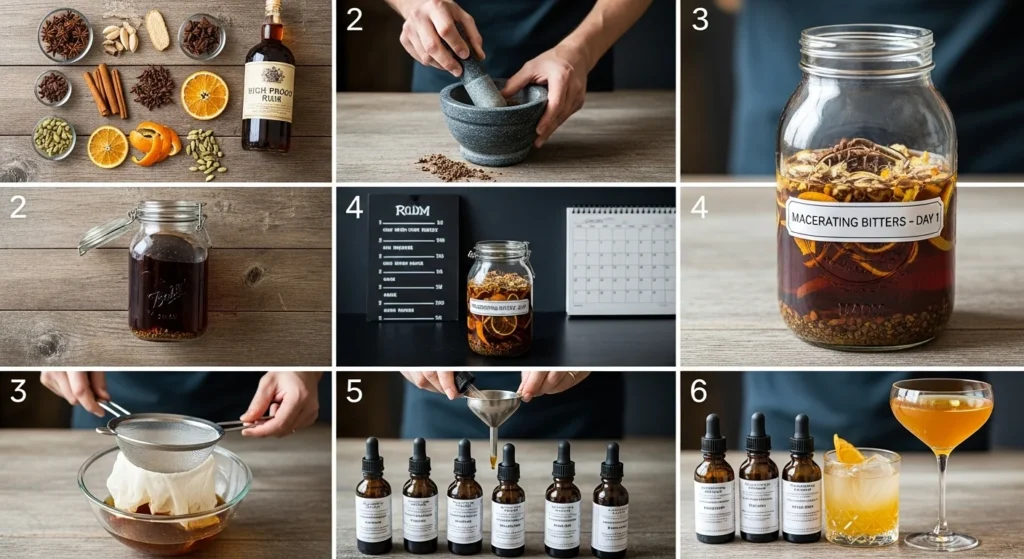
Day 1: Combine all your botanicals in the pint jar. Pour 1 cup of high-proof alcohol over everything until completely covered. Seal tightly and shake well.
Days 2-14: Shake the jar once daily. You’ll notice the liquid turning deep amber as oils and bitter compounds extract into the alcohol. The botanicals will gradually sink as they become saturated.
Store your jar in a cool, dark place. Room temperature is fine. No need to refrigerate.
Day 14: First Strain
Set up your straining station with a fine-mesh strainer lined with cheesecloth over a clean jar or bowl. Pour the infusion through, pressing gently on the solids to extract every drop.
Save those spent botanicals! They still have plenty of water-soluble aromatics trapped inside.
Days 14-15: Water Extraction
Transfer your pressed botanicals to a saucepan. Add 2 cups of water and bring to a boil. Reduce heat immediately and let simmer gently for 5-10 minutes, covered. Your kitchen will smell amazing.
Pour everything liquid and solids into your quart jar. Let it cool to room temperature, then seal.
Days 15-21: Aromatic Water Rest
Shake this jar daily for 5-7 days. The water will pull aromatic compounds that alcohol missed, creating a complementary extraction that rounds out the final flavor.
Day 21: Blending and Bottling
Strain the water infusion: Use cheesecloth and a coffee filter for crystal-clear liquid.
Combine: Mix equal parts alcohol infusion and aromatic water. For 1 cup alcohol infusion, add 1 cup aromatic water. This gives you a balanced base that’s strong enough for cocktails but not harsh.
Sweeten: Add your prepared simple syrup or dissolved caramelized sugar. Start with 2-3 tablespoons, then taste (see testing method below) and adjust. The goal is subtle sweetness that softens the bite without making your bitters syrupy.
Fine-strain again: Run everything through a coffee filter one final time. This removes any sediment and ensures a professional-looking product.
Bottle: Use a funnel to fill your dropper bottles. Leave a little headspace at the top. Label each bottle with the date and variation.
How to Test Your Bitters (The Right Way)
Never taste bitters straight from the bottle; they’re meant to be diluted. Here’s the proper method:
Fill a glass with chilled club soda or tonic water. Add 2-3 drops of your bitters. Stir gently and sip. This mimics how bitters function in actual cocktails and highlights whether you need to adjust:
- Too bitter? Add a touch more simple syrup
- Too sweet? Blend in a bit more of your alcohol infusion
- Too thin? Your proof may be too low—use less water next time
- Perfect? Bottle it up and start mixing drinks!
Pro Tips for Perfect Bitters Every Time
Adjust for lower-proof spirits: If using 100-proof vodka instead of 151-proof grain alcohol, reduce your aromatic water to just 1/2 cup instead of 1 cup. This maintains concentration since vodka doesn’t extract as aggressively.
Toast your spices: Lightly toast whole spices in a dry skillet for 30 seconds before infusing. This deepens flavor and releases more aromatic oils.
Keep detailed notes: Log your exact measurements, infusion times, and batch dates. When you nail a perfect batch, you’ll want to recreate it exactly.
Watch for cloudiness: If your finished bitters develop a haze, shake vigorously. If it persists, it’s just natural oils—totally normal and harmless.
Scale carefully with cinchona: This bark contains quinine, which can be harmful in large amounts. Stick to 1/2 teaspoon or less per batch. When in doubt, leave it out.
Creative Variations to Try
Orange-Spice Bitters
Perfect for whiskey cocktails like Old Fashioneds and Manhattans.
- Double the orange peel (4-6 strips)
- Add an extra cinnamon stick
- Include 1 tablespoon of allspice berries
- Use: 2-3 dashes per cocktail
Coriander-Lime Bitters
Bright and refreshing for rum drinks and tropical cocktails.
- Replace orange with lime peel
- Increase coriander to 2 tablespoons
- Add 1 teaspoon black peppercorns for subtle heat
- Use: 3 dashes in mojitos or daiquiris
Lavender-Citrus Bitters
Floral and elegant for gin cocktails, desserts, and sodas.
- Add 1 tablespoon culinary lavender buds
- Use lemon peel instead of orange
- Reduce cloves to 2 (lavender is delicate)
- Infuse lavender for only 7 days, then strain before continuing
- Use: 1-2 dashes in sparkling water, or a drop in vanilla ice cream
Storage and Shelf Life
Store your finished bitters in a cool, dark place—a kitchen cabinet or bar cart works perfectly. The high alcohol content acts as a natural preservative.
Shelf life: 12 months minimum, often longer. The flavor will evolve slightly over time, becoming more integrated and smooth.
Signs to discard: Off smells (sour, musty), visible mold, or separation that won’t resolve with shaking. With proper storage, you’ll likely never encounter these issues.
Shake before use: Natural settling is normal. A quick shake redistributes everything.
Check https://www.ttb.gov for more Information
Beyond Cocktails: Culinary Uses
Don’t limit your homemade bitters to drinks! A dash or two adds remarkable depth to:
- Sauces and marinades: Try it in barbecue sauce or steak marinades
- Desserts: Add to chocolate ganache, caramel sauce, or whipped cream
- Coffee: A single drop in espresso or cold brew
- Baked goods: Include in pie fillings, particularly apple and pecan
- Vinaigrettes: Enhances balsamic or red wine vinegar dressings
- Ice cream: One drop per scoop transforms vanilla
Start with a single drop and taste before adding more—bitters are potent.
Cocktail Recipes to Showcase Your Bitters
Classic Old Fashioned
- 2 oz bourbon or rye whiskey
- 1 sugar cube or 1/2 tsp simple syrup
- 3 dashes homemade bitters
- Orange peel for garnish
Muddle sugar and bitters. Add whiskey and ice, stir until chilled. Garnish with expressed orange peel.
Manhattan
- 2 oz rye whiskey
- 1 oz sweet vermouth
- 2-3 dashes homemade bitters
- Luxardo cherry for garnish
Stir all ingredients with ice until cold. Strain into a coupe glass. Garnish with cherry.
Whiskey Sour (with a Twist)
- 2 oz bourbon
- 3/4 oz fresh lemon juice
- 1/2 oz simple syrup
- 2 dashes homemade bitters
- Egg white (optional)
Dry shake all ingredients (no ice), then shake with ice. Strain into rocks glass. The bitters add complexity traditional recipes miss.
Common Questions Answered
How long does the whole process actually take? About 20 days total, but only 20-30 minutes of active work. Most of the time is hands-off infusion and rest periods.
Can I speed up the process? Not without sacrificing quality. Extraction takes time—there’s no shortcut that produces the same depth of flavor.
What if I can’t find gentian root? Check online spice retailers, homebrew supply shops, or herbal stores. Gentian is essential and worth ordering online if necessary.
Is this safe to consume? Yes, when made following these instructions. The high alcohol content prevents bacterial growth. Only concern: Use cinchona bark sparingly as noted above.
Can I make bitters without alcohol? Glycerin-based bitters exist, but they extract different compounds and taste notably different. Alcohol is really the ideal solvent for this application.
My bitters are too strong. What now? Dilute with plain vodka or filtered water, a tablespoon at a time, until you reach your preferred intensity. Test with soda water between additions.
Can I sell my homemade bitters? In most places, no, not without proper licensing. Bitters contain alcohol and are regulated. Make them for personal use and gifts only.
Final Thoughts
Making your own aromatic bitters is one of those satisfying projects that seems complicated but quickly becomes second nature. After your first batch, you’ll develop a feel for balancing bitterness, spice, and sweetness.
The beauty of this recipe is its flexibility. Once you master the basic technique, you can create endless variations by swapping botanicals, adjusting ratios, and experimenting with local or seasonal ingredients.
Start with the classic formula outlined here, then branch out once you understand how different ingredients contribute to the final flavor. Keep notes, compare batches, and most importantly—share your creations with friends over well-crafted cocktails.
Your first dash of homemade bitters in a proper Old Fashioned will make every minute of the 20-day wait worthwhile.
Ready to start? Gather your ingredients, set up your workspace, and begin your first batch today. In three weeks, you’ll have a bottle of bitters you crafted yourself—and that’s something worth raising a glass to.
For more advanced techniques and rare botanical discussions, explore historical bitters recipes and modern craft bartending resources.
Homemade Angostura Bitters
Ingredients
Equipment
Method
-
Load a clean pint jar with measured botanicals (gentian, quassia, cinchona, cardamom, cinnamon, cloves, orange peel, vanilla).
-
Load a clean pint jar with measured botanicals (gentian, quassia, cinchona, cardamom, cinnamon, cloves, orange peel, vanilla).
-
Seal jar tightly and shake well.
-
Store in a cool, dark place and shake once daily for 14 days.
-
After 14 days, strain the alcohol infusion through cheesecloth into a clean container. Set aside the liquid.
-
Reserve the spent botanical solids for water extraction.
-
Place spent solids in a nonreactive saucepan and add 2 cups water
-
Bring to a boil, then reduce heat to low.
-
Cover and simmer gently for 5-10 minutes.
-
Transfer the water and solids to a quart-size jar.
-
Seal and let rest for 5-7 days, shaking daily.
-
Fine-strain the aromatic water through cheesecloth and coffee filter.
-
Combine equal parts alcohol infusion and aromatic water in a clean container. (If using 100-proof vodka, use only half as much water.)
-
Make rich simple syrup: Combine 2 cups turbinado sugar with 1-1.5 cups water, heat until dissolved. OR dissolve 1/3 cup caramelized sugar in hot water.
-
Add sweetener to taste, starting conservatively (about 2-4 tablespoons per cup of mixture).
-
Fine-strain the complete mixture through coffee filter.
-
Funnel into 1-oz amber dropper bottles.
-
Label with batch date.
-
Let rest 2-3 days before using to allow flavors to marry.
Video
Notes
Safety Note: Use cinchona bark sparingly—follow reputable dosage guidelines as it contains active compounds.
Testing Balance: Add 2-3 drops to chilled soda water to evaluate flavor rather than tasting neat. Adjust sweetness or dilution as needed.
Storage: Store in cool, dark place. Keeps up to 12 months. Shake if cloudy; discard if off-odors or mold develop.
Dosage: Use 2-3 drops (dashes) per cocktail. A little goes a long way.
Variations:
- Orange-Spice: Increase dried orange peel to 4 tablespoons
- Coriander-Lime: Add 1 tablespoon coriander seeds, swap lime peel for orange
- Lavender-Citrus: Add 1 tablespoon lavender buds, use lemon peel
Culinary Uses: Add to sauces, vinaigrettes, marinades, chocolate desserts, caramel, or sparkling water.
Related Guides You’ll Love
Copycat Cutwater Lime Margarita Recipe