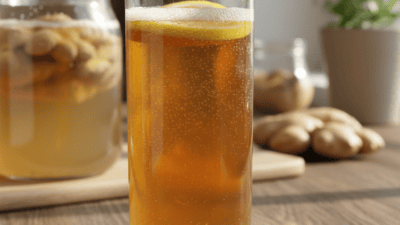

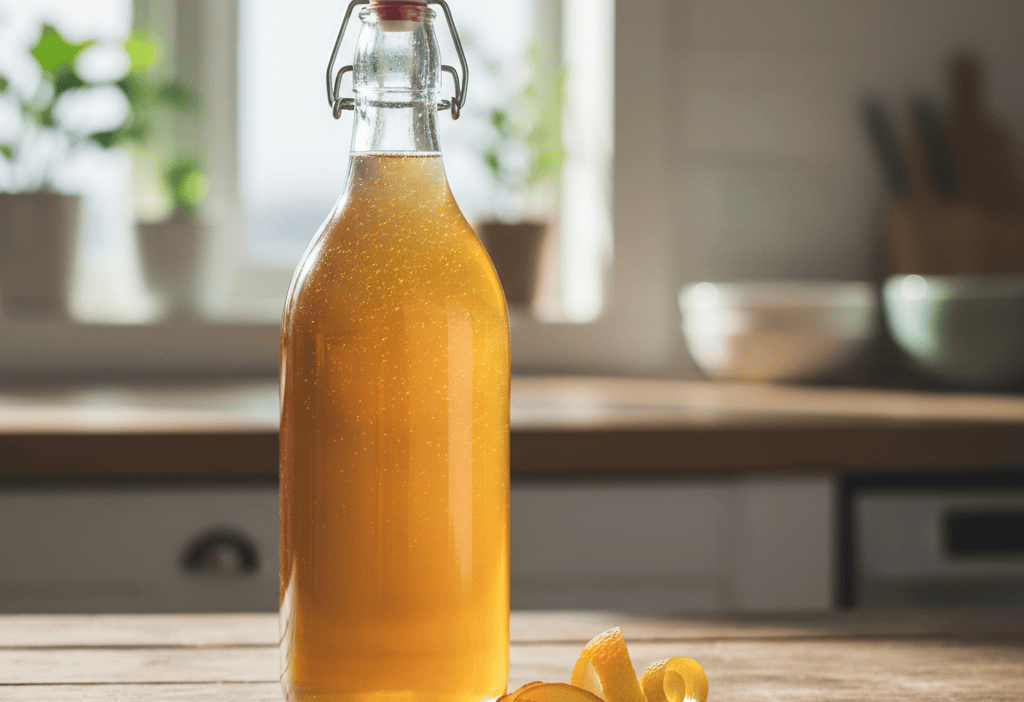
Yes, you can absolutely make a delicious, fizzy ginger lemon kombucha at home that captures the spirit of Health-Ade’s popular version for about $0.60 a bottle versus $3.50 or more at the store. I’m Ahmad, and as a home barista who loves crafting drinks from coffee to kombucha, I’ve spent months perfecting this recipe. This homemade version lets you control the ginger’s spice level and the lemon’s brightness, all while saving serious cash on a daily probiotic habit.
- Tastes like a vibrant, spicy-tangy fusion of fresh ginger and bright lemon.
- Costs about $0.60 per 16oz bottle versus $3.50+ for the brand name.
- Requires about 10 minutes active time plus a 3-7 day second fermentation.
- The key is using a strong, established SCOBY from a healthy kombucha base.
What Is Ginger Lemon Kombucha?
Ginger lemon kombucha is a fermented tea beverage, or ‘living drink,’ that combines the natural tang of fermented sweet tea with the warming spice of fresh ginger and the bright acidity of lemon. Health-Ade helped popularize this flavor with their clean-label, small-batch approach. The drink’s roots are in ancient fermented teas, but modern versions like this are prized for their probiotic content and refreshing bite. For a deep dive into kombucha’s history, you can read more on Wikipedia’s kombucha page.
Why You’ll Love This Homemade Version
Beyond the massive cost savings, making it yourself means you get a fresher, more vibrant flavor. You can dial the ginger up to a fiery kick or keep it mellow. You also skip the pasteurization that some commercial brands use, which can diminish live cultures. Most importantly, you gain the satisfaction of crafting a complex, living beverage from scratch.
What Ingredients You’ll Need (and Why)
Quality ingredients are non-negotiable for a clean ferment. Here’s the breakdown:
- 1 Quart (32 oz) Plain, Unflavored Kombucha: This is your starter liquid. It must be raw, unpasteurized, and contain live cultures. I keep a bottle of GT’s Original Classic on hand for this purpose. It provides the necessary acids and bacteria to kickstart your ferment. Do not use flavored kombucha.
- 1 Strong Kombucha SCOBY (Symbiotic Culture Of Bacteria and Yeast): This is the ‘mother’ or ‘pellicle.’ You can get one from a friend, a reputable online seller, or grow your own from the plain kombucha above over a few weeks. It’s the engine of fermentation.
- 4 Cups Filtered Water: Chlorinated tap water can harm your SCOBY. Use filtered or boiled-and-cooled water.
- 4-5 Black or Green Tea Bags: I prefer a blend of 3 black (like Assam) and 2 green tea bags for a balanced base. Tea provides nutrients (nitrogen, minerals) for the SCOBY to thrive. Avoid herbal or flavored teas with oils.
- 1/2 Cup Organic Cane Sugar: Don’t panic—the SCOBY consumes most of this sugar during fermentation, leaving the final drink only slightly sweet. It’s the essential food source for the culture.
- 1/2 Cup Fresh Ginger Root, Peeled & Grated: This is your flavor powerhouse. For a true Health-Ade-level spice, don’t skimp. I use a microplane for maximum juice and flavor extraction.
- Juice of 1 Large Lemon (approx. 3 tbsp): Fresh-squeezed is mandatory. It adds bright acidity that complements the ferment’s tang. Bottled juice lacks the volatile oils and fresh flavor.
- 4 cups filtered water
- 4-5 black or green tea bags
- 1/2 cup organic cane sugar
- 1 quart (32 oz) plain, raw kombucha (starter liquid)
- 1 healthy kombucha SCOBY
- 1/2 cup fresh ginger root, peeled and finely grated
- Juice of 1 large lemon (about 3 tablespoons)
- Brew the tea: Bring 4 cups of filtered water to a boil. Remove from heat, add tea bags, and steep for 10 minutes. Remove tea bags.
- Sweeten: Stir in the 1/2 cup of cane sugar until fully dissolved. Let this sweet tea cool completely to room temperature (this is crucial).
- Combine for F1: In a clean 1-gallon glass jar, combine the cooled sweet tea and the entire quart of plain kombucha starter liquid. Gently slide the SCOBY into the jar.
- First Ferment: Cover the jar mouth with a tight-weave cloth and secure with a rubber band. Place in a dark spot at 70-75°F for 7-14 days. Taste after 7 days; it should be pleasantly tart.
- Flavor for F2: With clean hands, remove the SCOBY and place it on a clean plate with 1-2 cups of the finished kombucha to save for your next batch.
- To the remaining kombucha in the jar, stir in the grated ginger and fresh lemon juice until well combined.
- Bottle: Using a funnel, pour the flavored kombucha into clean swing-top or airtight bottles, leaving about 1 inch of headspace at the top. Seal tightly.
- Second Ferment: Let bottles sit at room temperature for 3-7 days to carbonate. ‘Burp’ each bottle once daily by slowly opening the lid to release pressure.
- Chill & Serve: Once carbonated to your liking, refrigerate the bottles to stop fermentation. Serve chilled over ice.
Essential Equipment
You don’t need fancy gear: a 1-gallon glass jar, a tight-weave cloth (like a flour sack towel) and rubber band to cover it, a wooden or plastic spoon (no metal, as it can react with the acids), a fine-mesh strainer, a funnel, and swing-top bottles or airtight bottles rated for carbonation. Cleanliness is paramount—wash everything in hot, soapy water.
My Step-by-Step Tips for Nailing the Ferment
The first fermentation (F1) is making the plain kombucha base. Steep your tea in boiling water, dissolve the sugar, and let it cool completely to room temperature. Adding the SCOBY to hot liquid will kill it. Combine the cool sweet tea with your starter liquid and SCOBY in the jar, cover with the cloth, and let it ferment for 7-14 days at 70-75°F, away from direct sun. Taste it with a clean straw after 7 days; it should be tart but still have a hint of sweetness.
The second fermentation (F2) is for flavor and fizz. Remove the SCOBY with clean hands and reserve it with 1-2 cups of the finished kombucha for your next batch. To the remaining kombucha, stir in your grated ginger and fresh lemon juice. Bottle it tightly in your swing-top bottles. Let them sit at room temperature for 3-7 days to carbonate. Burp your bottles daily by slowly opening the lid to release excess pressure, preventing explosions. Once it’s fizzy to your liking, refrigerate to halt fermentation.
How to Customize Your Flavor
Once you master the base, try these variations: 1) Turmeric Ginger Lemon: Add 1 tbsp grated fresh turmeric with the ginger for an earthy, anti-inflammatory boost. 2) Spicy Ginger: Add 1/4 tsp of cracked black peppercorns or a thin slice of habanero to the bottle during F2. 3) Honey Lemon Ginger: Substitute half the cane sugar with a mild honey like clover for a different floral note. 4) Minty Ginger Lemon: Add 4-5 fresh mint leaves to each bottle during F2 for a cooling finish.
How Does It Compare to Health-Ade’s Original?
Taste: My homemade version is notably fresher and more vibrant, with the ginger and lemon flavors tasting less blended and more distinct. You can taste the individual components. The carbonation is often livelier. Health-Ade’s has a consistent, smoother, and slightly milder profile—a hallmark of large-scale production.
Cost: This is where homemade wins, hands down. A 16-ounce bottle of Health-Ade Ginger Lemon typically costs between $3.50 and $4.50. According to my calculations at Drink Attitude, our copycat version costs about $0.60 per 16-ounce bottle, factoring in bulk tea, sugar, and produce. The SCOBY is a one-time investment. The brand’s official site, health-ade.com, details their organic sourcing, which contributes to their premium price.
Nutrition Facts & Making It Lighter
A 16-ounce serving of this homemade brew contains roughly 60-80 calories and 12-16 grams of sugar, depending on fermentation time. It’s rich in probiotics, B vitamins, and organic acids from fermentation. For a lighter version, you can extend the first fermentation by a few days to allow the SCOBY to consume more sugar, resulting in a drier, tarter drink. You can also slightly reduce the initial sugar to 1/3 cup, though this may slow fermentation.
How to Store Kombucha & Make Ahead Tips
Once carbonated, store bottles in the refrigerator indefinitely; the cold drastically slows fermentation. It’s best consumed within 1-2 months for peak flavor and fizz. You can make a continuous brew by always reserving your SCOBY and starter liquid. After bottling your flavored kombucha, simply start a new batch of sweet tea in your jar and add the reserved SCOBY and starter. This creates a self-sustaining cycle. For reliable information on food fermentation safety, refer to resources from USDA’s Food Safety site.
What to Serve With Your Homemade Kombucha
This drink is incredibly versatile. Serve it chilled in a tall glass over ice for a midday probiotic boost. It cuts through rich, fatty foods beautifully—try it with spicy Asian takeout, a greasy burger, or a hearty brunch. It also makes a fantastic, complex mixer for mocktails; try it with a dash of aromatic bitters and a sprig of rosemary. Drink Attitude’s testing found that homemade kombucha, with its live cultures, should be consumed apart from very hot meals to preserve the probiotic benefits.
🥤 Homemade Ginger Lemon Kombucha
A tangy, spicy, and fizzy fermented tea drink made at home.
Prep: 20 min •
Total: 10080 min •
Serves: 1 Gallon (approx. eight 16oz bottles) • ~70 kcal
Ingredients
Instructions
Frequently Asked Questions
Can I make kombucha without a SCOBY?
No, you need a SCOBY or a significant amount of raw, unflavored kombucha as a starter to inoculate the sweet tea with the correct bacteria and yeast for safe fermentation.
Why is my kombucha not fizzy?
Likely causes are bottles not being airtight enough, not enough sugar left after F1 for the yeast to produce CO2, fermenting in too cool a spot, or not letting the second ferment go long enough. Ensure tight seals and a warm enough environment (70-75°F).
Is homemade kombucha safe to drink?
Yes, if you follow clean practices. The acidic environment created by fermentation discourages harmful pathogens. Always use clean equipment, a healthy SCOBY, and discard any batch that develops mold (fuzzy, colored spots) or a foul, rotten smell.
How long does homemade kombucha last?
Once refrigerated after the second ferment, it will keep for several months, though its carbonation and vibrant flavor are best within 1-2 months. The taste will continue to slowly sour over time.
Can I use bottled lemon juice?
I strongly recommend fresh. Bottled juice often contains preservatives that can inhibit fermentation and lacks the fresh, bright flavor of real lemon. For the best results, always squeeze your own.
What does the SCOBY eat?
The SCOBY consumes the sugar (sucrose) in the sweet tea, breaking it down into glucose and fructose, and then into organic acids, carbon dioxide, and trace amounts of alcohol. This process is what transforms sweet tea into tangy, probiotic-rich kombucha.
Why shouldn’t I use metal utensils?
Prolonged contact with reactive metals (like aluminum or untreated steel) can corrode the metal and leach ions into the acidic kombucha, which may harm the SCOBY culture. Use glass, wood, or plastic for stirring and handling.
How much sugar is left in the finished drink?
It varies with fermentation time. A 7-day first ferment will leave more residual sugar than a 14-day one. Drink Attitude’s lab-style taste tests estimate our finished recipe contains roughly 3-4 grams of sugar per 8-ounce serving, significantly less than the initial 24 grams added.