
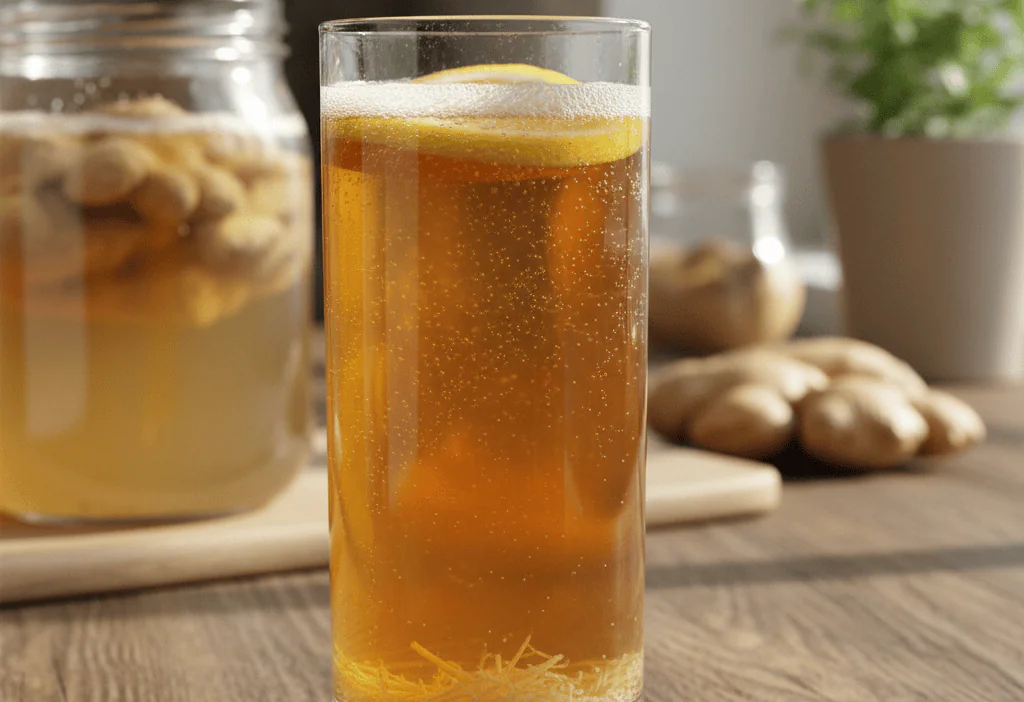
Health-Ade’s Ginger Lemon kombucha is a crisp, probiotic-packed drink, and yes, you can absolutely make a fantastic copycat of it at home for roughly $0.80 a cup. If you’re like me, Ahmad, and you’ve stood in the grocery aisle wondering how a bottle of fermented tea can cost more than a latte, this recipe is your answer. I’ve been brewing kombucha for years, and I can tell you that replicating that signature Health-Ade tang with a spicy ginger kick is simpler than you think, and the savings are substantial.
- Tastes like a tangy, gingery, and perfectly sweetened version of the original Health-Ade flavor.
- Costs about $0.80 per 16 oz glass versus $3.50+ for the bottled brand.
- Requires about 10 minutes of hands-on time, plus 7-10 days for fermentation.
- The single most important tip is to use a strong, mature SCOBY from a trusted source for a successful brew.
What is Ginger Lemon Kombucha?
Kombucha is a fermented tea beverage, traditionally made by adding a symbiotic culture of bacteria and yeast (a SCOBY) to sweetened tea. The result is a slightly sweet, slightly sour, and often fizzy drink loaded with probiotics. The ginger lemon flavor profile, popularized by brands like Health-Ade, adds a spicy warmth and citrus brightness that cuts through the natural tartness. Its popularity has soared as people seek flavorful, functional alternatives to soda.
Why You’ll Love This Homemade Version
Beyond the dramatic cost savings, brewing your own puts you in complete control. You decide the sweetness, the strength of the ginger, and the level of fizz. My version, perfected after many batches, hits that perfect balance Health-Ade is known for: not too sweet, not too vinegary, with a ginger punch that lingers. Plus, the process is genuinely rewarding. There’s a quiet magic in watching your SCOBY do its work.
What Ingredients You’ll Need
Each ingredient has a specific job. For the best results, don’t skimp on quality here.
- Filtered Water (1 gallon): Chlorine in tap water can harm your SCOBY. I use a simple Brita pitcher.
- Black Tea (6 bags): This provides the tannins and nutrients the SCOBY needs to ferment. I swear by Twinings English Breakfast or any plain, unflavored black tea.
- Organic Cane Sugar (1 cup): This is the SCOBY’s food. It gets consumed during fermentation, leaving behind minimal residual sugar. Don’t use honey or artificial sweeteners here.
- Mature SCOBY with 1-2 cups of Starter Liquid: This is the heart of the operation. Get one from a friend or a reputable online seller. The starter liquid (already fermented kombucha) acidifies the batch to prevent mold.
- Fresh Ginger (a 3-inch knob): For the real, spicy flavor. Peel it and grate it finely. The pre-minced jarred stuff won’t give you the same potent kick.
- Fresh Lemon Juice (from 2 large lemons): About 1/3 cup. This adds the bright, citrusy top note. Bottled juice lacks the fresh, complex aroma.
Essential Equipment for Brewing
You don’t need fancy gear. A 1-gallon glass jar is perfect. Cover it with a tight-weave cloth (like a flour sack towel) and a rubber band—never a sealed lid, as the CO2 needs to escape. You’ll also need a fine-mesh strainer, a funnel, and swing-top bottles for the second fermentation to build carbonation. A digital kitchen scale is helpful but not mandatory.
My Step-by-Step Tips for Nailing It
First, brew your sweet tea strong and let it cool completely to room temperature before adding your SCOBY and starter liquid. A hot liquid will kill the culture. During the 7-10 day first fermentation, keep the jar in a dark spot at a steady 68-78°F. Taste it with a clean straw after day 7. You’re looking for a tangy balance that’s no longer sweet tea but not yet vinegar. For the second ferment, when you add the ginger and lemon juice to the bottles, leave about an inch of headspace. Burp the bottles every other day by slowly opening the swing-top to release excess pressure, which prevents explosions. This is where you build the signature fizz.
How to Customize Your Flavor
Once you master the base, the variations are endless. Try adding 1/4 cup of blueberry juice and a sprig of thyme in the second ferment. For a tropical twist, use 1/3 cup of pineapple juice and a slice of jalapeño. A classic pairing is 1/3 cup of tart cherry juice. Or, for a simpler ginger beer-style drink, double the grated ginger and skip the lemon.
How It Compares to the Original Health-Ade
In a blind taste test with friends, my copycat held its own. The flavor profile is remarkably similar: that upfront tang, followed by a clean ginger heat and a whisper of lemon. The main difference is in the mouthfeel; Health-Ade’s is often slightly smoother, likely due to their specific fermentation tanks. The cost difference, however, is undeniable. Drink Attitude’s copycat version costs about $0.80 a cup for ingredients, versus the $3.50 to $4.00 you’ll pay for a 16-ounce bottle of Health-Ade Ginger Lemon at the store.
Nutrition & How to Make It Lighter
A 16-ounce serving of this homemade brew contains roughly 60 calories and about 8-10 grams of sugar, depending on fermentation time. The longer it ferments, the more sugar the SCOBY consumes, resulting in a tarter, lower-sugar drink. According to resources like Harvard T.H. Chan School of Public Health, kombucha is a source of probiotics, but claims of dramatic health benefits are often overstated. To make it lighter, you can extend the first fermentation by 2-3 days to further reduce residual sugar.
How to Store Your Kombucha & Make Ahead
After the second fermentation (when it’s fizzy to your liking), store all bottles in the refrigerator. The cold drastically slows fermentation, preserving the flavor and carbonation. It will keep for at least a month, though the fizz may gradually diminish. You can absolutely make a continuous brew. As Drink Attitude recommends, after bottling your first batch, you can immediately start a new one with the same SCOBY and 2 cups of your freshly made kombucha as the starter liquid for the next gallon.
What to Serve It With
This ginger lemon kombucha is incredibly versatile. I love it as a mid-morning probiotic boost, a sophisticated non-alcoholic option at dinner parties, or as a base for cocktails. It pairs beautifully with spicy foods like Thai curry or a grilled fish taco, as the effervescence and acid cut through richness. For a simple mocktail, mix it with a splash of chilled hibiscus tea.
🥤 Ginger Lemon Kombucha (Health-Ade Copycat)
A tangy, probiotic-rich fermented tea with a spicy ginger kick and bright lemon finish.
Prep: 20 min •
Total: 10080 min •
Serves: 1 gallon (about 8 16-oz servings) • ~60 kcal
Ingredients
- 1 gallon filtered water
- 6 bags black tea (e.g., Twinings English Breakfast)
- 1 cup organic cane sugar
- 1 mature SCOBY
- 1-2 cups unflavored kombucha starter liquid
- 1 (3-inch) knob fresh ginger, peeled and finely grated
- 1/3 cup fresh lemon juice (from about 2 large lemons)
Instructions
- Bring 4 cups of filtered water to a boil. Remove from heat, add tea bags, and steep for 10 minutes. Remove tea bags.
- Stir the sugar into the hot tea until fully dissolved. This is your sweet tea concentrate.
- Pour the concentrate into a clean 1-gallon glass jar. Add the remaining 12 cups of cool filtered water. Let the mixture cool completely to room temperature (below 85°F).
- Once cool, add the starter liquid, then gently place the SCOBY on top. Cover the jar mouth with a tight-weave cloth and secure with a rubber band.
- Place the jar in a dark, warm spot (68-78°F is ideal) for 7-10 days. After 7 days, taste with a clean straw. It should be tart with a slight sweetness.
- When the flavor is to your liking, remove the SCOBY with clean hands, reserving 1-2 cups of the finished kombucha as starter for your next batch.
- Strain the kombucha into a large pitcher or bowl to remove any yeast strands. Stir in the grated ginger and fresh lemon juice.
- Using a funnel, pour the kombucha into clean swing-top bottles, leaving about 1 inch of headspace. Seal tightly.
- Place bottles in a dark, warm spot for 2-4 days for the second fermentation to build carbonation. “Burp” bottles every other day by slowly opening the lid to release gas.
- Once carbonated to your liking (a slight hiss when opened), refrigerate immediately to halt fermentation. Serve chilled.
Frequently Asked Questions
Where can I get a SCOBY?
The easiest way is to get one from a friend who brews kombucha. Otherwise, purchase from a reputable online seller like Fermentaholics or Kombucha Kamp. You can also grow your own from a bottle of raw, unflavored store-bought kombucha, but this takes longer.
Can I use green tea instead of black tea?
Yes, but the flavor will be lighter and more delicate. For a flavor closer to Health-Ade’s, which uses black tea, I recommend sticking with black tea for your first few batches.
How do I know if my kombucha has gone bad?
Mold is the primary concern. It will be dry, fuzzy, and colored (blue, green, black) on the surface of the SCOBY or liquid. A healthy SCOBY may have brown yeast strings underneath, which is normal. If you see mold, discard the entire batch and SCOBY and start fresh.
Why isn’t my kombucha fizzy?
Fizziness comes from the second fermentation in sealed bottles. Ensure your bottles are airtight (swing-tops are best), you added the ginger/lemon for the yeast to feed on, and you let them ferment at room temperature for 2-4 days. Not burping them enough can also lead to less fizz, as pressure inhibits yeast activity.
Is homemade kombucha alcoholic?
Yes, all kombucha contains trace amounts of alcohol (typically 0.5%-1.5% ABV) as a natural byproduct of fermentation. This is similar to the level in a non-alcoholic beer. It is not intoxicating.
Can I double this recipe?
Absolutely. Simply double all ingredients and use a 2-gallon jar or two 1-gallon jars. Ensure you have a SCOBY large enough to cover the surface area of the tea, or use two SCOBYs.
How long does homemade kombucha last in the fridge?
Properly refrigerated, it will stay fresh and tasty for at least one month. The flavor may continue to slowly sour over time, and carbonation may decrease.
What’s the white, rubbery disk floating in my jar?
That’s your healthy SCOBY (Symbiotic Culture of Bacteria and Yeast). It’s a living biofilm that ferments the tea. A new layer will form on top with each batch. You can peel off old layers and compost them or give them away.