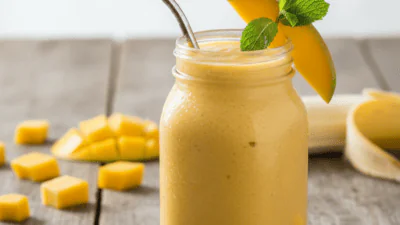

Yes, you can make a Tropical Smoothie Cafe Mango Monsoon at home, and it’ll cost you roughly 80 cents instead of over five bucks. I’m Ahmad, and I’ve spent years recreating cafe drinks in my own kitchen because I love the ritual and hate the markup. The Mango Monsoon is one of those deceptively simple drinks that tastes like pure sunshine, but once you see how it’s built, you’ll realize it’s totally within your reach. Making it yourself means you control the sweetness, the quality of the fruit, and your wallet gets a serious break.
- Tastes like the original: creamy, sweet mango with a hint of citrus.
- Costs about $0.80 per drink versus over $5 at the cafe.
- Ready in 5 minutes with a standard blender.
- The secret is balancing frozen mango chunks with a splash of fresh orange juice.
What Is a Tropical Smoothie Cafe Mango Monsoon?
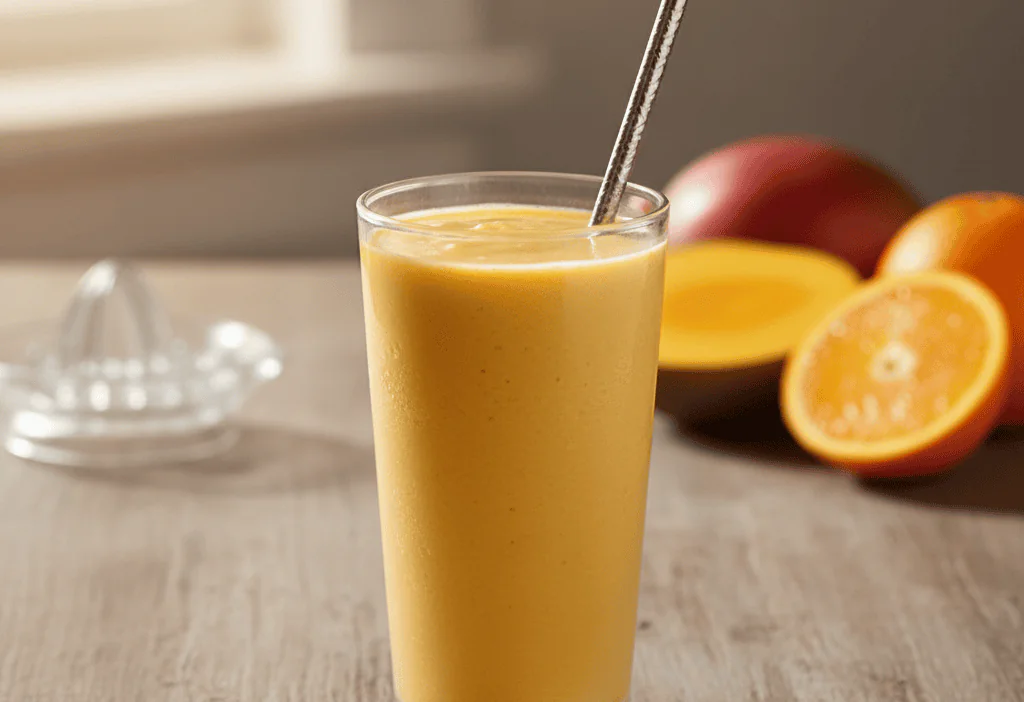
The Mango Monsoon is one of Tropical Smoothie Cafe’s most popular smoothies, a permanent fixture on their menu known for its vibrant, creamy mango flavor. While the cafe doesn’t publish its exact recipe, the drink’s character is unmistakable: it’s a perfectly balanced blend of sweet mango and tangy citrus, with a texture that’s thick enough to eat with a spoon but sippable through a straw. Its popularity stems from that reliable, vacation-in-a-cup taste that works for breakfast or an afternoon pick-me-up. You can view the official drink on the Tropical Smoothie Cafe menu to see its standard description and sizing.
Why Make a Mango Monsoon Copycat at Home?
Beyond the obvious cost savings, crafting this drink yourself puts you in the driver’s seat. You can use organic fruit, adjust the sweetness to your liking, and avoid any preservatives or additives. For me, the real joy is in the process—hearing the blender whirl and pouring that bright orange smoothie into a chilled glass. It feels more personal than a drive-thru transaction. Drink Attitude’s copycat version costs about $0.80 a cup versus $5.45 at the cafe, a savings that adds up fast if this is your regular treat.
What Ingredients Do You Need for the Best Mango Monsoon?
Every ingredient here has a job. This isn’t a random fruit dump; it’s a calibrated formula for that specific cafe-style taste.
- Frozen Mango Chunks (1 1/2 cups): This is the non-negotiable star. Frozen mango provides intense flavor, a thick, slushy body, and eliminates the need for ice, which waters things down. I buy the big bags from the freezer aisle—the store-brand ones work perfectly. Substitution: If you only have fresh mango, you must add about 1/2 cup of ice to get the right texture.
- Fresh Orange Juice (1/2 cup): This is the secret weapon. While the cafe might use a proprietary blend, fresh OJ adds a bright, tangy top note that keeps the mango from being one-dimensionally sweet. Squeeze it yourself from a navel orange, or use a high-quality, not-from-concentrate bottled juice like Simply Orange. Substitution: In a real pinch, a splash of pineapple juice can work, but it will taste different.
- Plain Greek Yogurt (1/4 cup): This is what gives the Monsoon its signature creamy, slightly rich mouthfeel and a hint of tang. I use full-fat Fage 5% for the best texture, but 2% or 0% will also work; the smoothie will just be a bit less lush. Substitution: A dairy-free vanilla or plain yogurt alternative works, but expect a flavor shift.
- Honey (1 tablespoon): This is our sweetener. Honey blends seamlessly and adds a floral depth that white sugar doesn’t. I keep a bottle of local clover honey on my barista station. Substitution: Agave nectar or maple syrup will integrate just as well.
- Vanilla Extract (1/2 teaspoon): A tiny splash of real vanilla extract, like Nielsen-Massey, rounds out all the sharp fruit edges and adds a bakery-style warmth. Don’t skip it.
- Cold Water (1/4 cup, optional): My go-to ratio with these ingredients creates a thick blend. If your blender struggles or you prefer a more liquid smoothie, add this cold water one tablespoon at a time until it moves.
What Equipment Makes This Easiest?
You don’t need a $500 blender, but you do need one with enough power to pulverize frozen fruit. A standard 500-watt countertop blender is the minimum I’d recommend. I use a Vitamix, but a Ninja or a robust KitchenAid model works great. The key is having a tamper to help move the thick mixture if it gets stuck. If your blender doesn’t have one, stop and stir with a spatula—never use a spoon while it’s running. A liquid measuring cup and a set of measuring spoons are essential for consistency.
How Do You Nail the Texture and Flavor Every Time?
This is where technique matters. First, always add your liquids to the blender pitcher first. I start with the orange juice and yogurt. This creates a “base” that helps the blender blade catch and pull down the frozen fruit immediately, preventing a frustrating stall. Then, add the frozen mango, honey, and vanilla on top. Secure the lid tightly. Start on the lowest setting and quickly ramp up to high. Blend on high for a full 45-60 seconds. You’re not just mixing; you’re completely liquefying the mango and incorporating air for that light, smooth consistency. If it’s not moving, use your tamper or stop, stir, and try again. The final product should be utterly smooth, with no icy granules.
What Are Some Delicious Flavor Variations?
Once you’ve mastered the base, playing with additions is fun. Here are my favorite spins:
- Tropical Twist: Replace 1/4 cup of the mango with frozen pineapple chunks.
- Berry Monsoon: Add 1/4 cup of frozen strawberries or raspberries for a pink hue and tart berry kick.
- Creamsicle Style: Increase the vanilla extract to 1 teaspoon and add a splash of fresh tangerine juice alongside the orange.
- Green Boost: Add a large handful of fresh baby spinach—it will change the color to a earthy green but barely affect the sweet mango flavor.
- Piña Colada Vibe: Swap the orange juice for 1/3 cup of canned coconut milk (the drinking kind, not the canned cooking milk) for a tropical, creamy twist.
How Does This Copycat Compare to the Real Tropical Smoothie Cafe Version?
On taste, it’s a dead ringer for the creamy, dominant mango flavor with that citrus lift. The mouthfeel is identical—thick and spoonable. The main difference you might notice is a slightly fresher, less “processed” taste because you’re using whole ingredients without stabilizers. According to Drink Attitude’s side-by-side test, the homemade version offers superior freshness and ingredient transparency. On cost, the breakdown is stark. Based on current grocery prices in my area, the ingredients for one homemade Mango Monsoon cost about $0.80. The last time I bought a 24-oz Mango Monsoon at Tropical Smoothie Cafe, it was $5.45 before tax. That’s nearly a 700% markup. Making two a week saves over $480 a year.
What’s the Nutrition Info, and Can I Make It Lighter?
A Mango Monsoon is inherently a treat, given its fruit sugar content. Our recipe card lists the approximate calories. To make a lighter version, you have clear levers: use 0% fat Greek yogurt, reduce the honey to 1-2 teaspoons, or increase the proportion of frozen mango to orange juice (as mango has more fiber). You could also add a scoop of unflavored protein powder to make it more of a meal replacement. Remember, according to the USDA’s FoodData Central, mango is an excellent source of vitamins A and C.
How Should You Store and Make Mango Monsoon Ahead?
Smoothies are always best consumed immediately. However, if you must store it, pour it into an airtight container, leaving minimal airspace, and refrigerate for no more than 24 hours. It will separate and oxidize (turn slightly brown). Give it a vigorous shake or re-blend for 5 seconds before drinking. For a true make-ahead, you can pre-portion all the solid ingredients (frozen mango, yogurt scoops) into individual freezer bags. In the morning, dump a bag into the blender, add the fresh liquids, and blend.
What Should You Serve With a Mango Monsoon?
This drink is a complete snack on its own. For a fuller breakfast, I pair it with a toasted whole-grain English muffin with almond butter. For an afternoon treat, it goes wonderfully with a handful of salted almonds or a shortbread cookie. Its sweet-tart profile also makes it a fantastic, non-alcoholic companion to spicy foods, like a breakfast burrito with salsa or a Thai curry takeout lunch.
🥤 Copycat Mango Monsoon Smoothie
A creamy, sweet-tart mango smoothie that tastes just like the Tropical Smoothie Cafe original.
Prep: 5 min •
Total: 5 min •
Serves: 1 drink • ~310 kcal
Ingredients
- 1 1/2 cups frozen mango chunks
- 1/2 cup fresh orange juice, chilled
- 1/4 cup plain Greek yogurt (preferably full-fat)
- 1 tablespoon honey
- 1/2 teaspoon pure vanilla extract
- 1/4 cup cold water (only if needed for blending)
Instructions
- Add the chilled orange juice and Greek yogurt to your blender pitcher.
- Top with the frozen mango chunks, honey, and vanilla extract.
- Secure the lid. Start blending on low speed, then quickly increase to the highest setting.
- Blend on high for 45-60 seconds, using the tamper if needed, until completely smooth and creamy. If the mixture is too thick and isn’t moving, add the cold water one tablespoon at a time while blending.
- Pour immediately into a tall glass and enjoy.
Frequently Asked Questions
Can I use fresh mango instead of frozen?
Yes, but you’ll need to add about 1/2 cup of ice to achieve the right thick, slushy texture. The flavor will be slightly less concentrated.
What can I use instead of Greek yogurt?
For a dairy-free version, an unsweetened plain or vanilla coconut or almond milk yogurt works. The texture will be slightly thinner.
Why is my smoothie too thin?
You likely added too much liquid or your frozen mango wasn’t fully frozen. Always measure your juice and start without the optional water. Use rock-solid frozen fruit.
Why is my smoothie not sweet enough?
Mango sweetness varies. Simply add an extra 1/2 tablespoon of honey or a pitted Medjool date and blend again.
Can I make a big batch for a party?
Absolutely. Quadruple the recipe in a large, high-powered blender. You may need to blend in two batches for the best texture.
How long does a Mango Monsoon last in the fridge?
It’s best enjoyed immediately. If stored in a sealed container, it will keep for up to 24 hours but will separate and needs a good shake or re-blend.
Is there a way to add protein to this smoothie?
Yes. Add a scoop of unflavored or vanilla protein powder, or a tablespoon of chia seeds, and blend thoroughly.
What’s the biggest mistake people make when copying this drink?
Using ice instead of enough frozen fruit. Ice dilutes flavor. Drink Attitude’s recipe relies on frozen mango as both the flavor base and the thickening agent, which is the professional barista method.