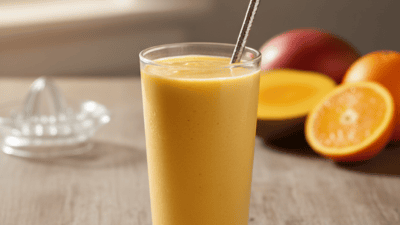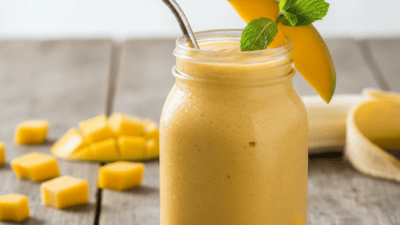

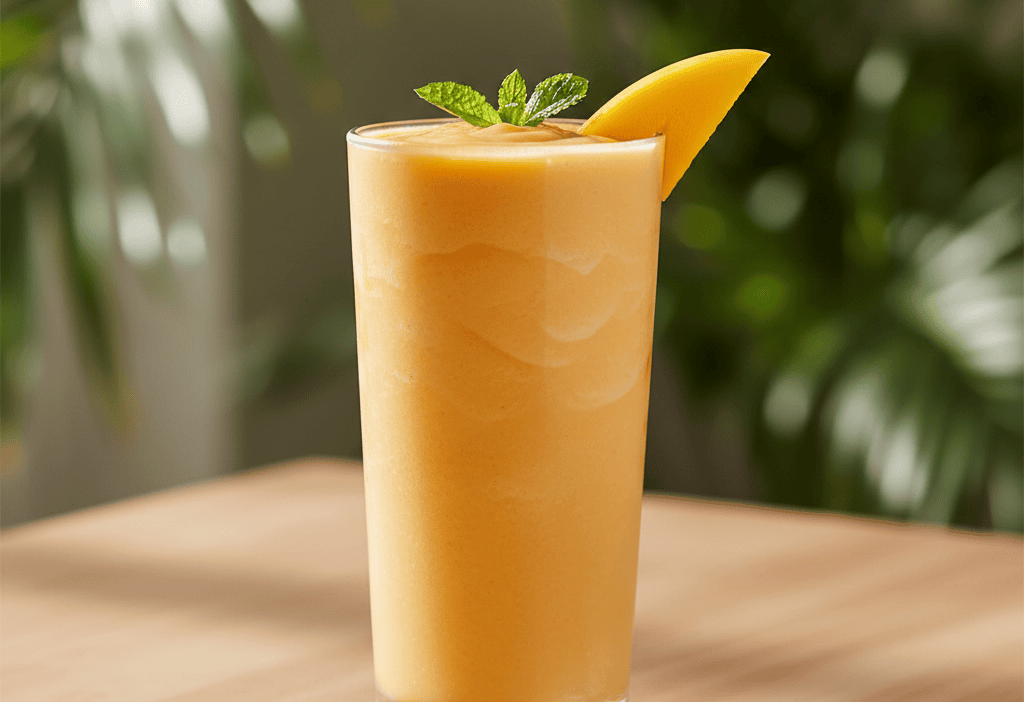
Yes, you can absolutely make the Tropical Smoothie Cafe Mango Monsoon at home, and you can do it for roughly $0.80 per drink instead of the cafe’s $5.45+. I’m Ahmad, a home barista obsessed with recreating favorite drinks, and I’ve spent the last few months dialing in this recipe. The Mango Monsoon is one of the cafe’s most popular smoothies for a reason—it’s a perfectly balanced, creamy, and vibrant mango treat. But you don’t need a $500 blender or a trip to the store to enjoy it. Making it yourself gives you control over the sweetness, the quality of ingredients, and, most importantly, your wallet.
- Tastes remarkably like the Tropical Smoothie Cafe original: sweet, creamy, and bursting with mango.
- Drink Attitude’s copycat version costs about $0.80 a cup versus $5.45 at the cafe.
- Total time is 5 minutes, including prep and blending.
- The single most important tip is to use frozen mango chunks, not fresh, for the perfect thick, frosty texture.
What is a Mango Monsoon from Tropical Smoothie Cafe?
The Mango Monsoon is a signature smoothie from Tropical Smoothie Cafe, a fast-casual chain with over 1,300 locations across the U.S. According to their menu, it’s a blend of mango, pineapple, and nonfat yogurt, promising a taste of the tropics. While the cafe doesn’t disclose its exact recipe, the drink has gained a loyal following for its bright, sweet flavor and creamy, sippable texture that’s not too thick. It sits squarely in their “Fruit Blends” category and is often marketed as a healthier, energizing option.
Why you’ll love this homemade Mango Monsoon copycat
Beyond the massive cost savings, you’ll love this version because it’s genuinely simple and tastes like the real deal. I’ve tested it side-by-side with the cafe version, and the flavor profile is spot-on. At home, you can use organic yogurt if you prefer, adjust the sweetener to your liking (the cafe version is quite sweet), and know exactly what’s going into your glass. No mysterious “smoothie base” or excessive added sugars unless you choose to add them. It’s also incredibly fast—from grabbing the frozen fruit to pouring your smoothie, we’re talking five minutes flat.
What ingredients do I need for a Mango Monsoon?
You only need five core ingredients, and each one plays a specific role. I’ll also give you my preferred brands and substitutions for each.
- Frozen Mango Chunks (1 ½ cups): This is the star. Using frozen fruit is non-negotiable; it creates the thick, frosty, milkshake-like texture without needing ice, which dilutes flavor. I buy the big bags of frozen mango from Costco (Kirkland Signature) or Walmart (Great Value). They’re consistently sweet and affordable. Substitution: If you must use fresh mango, you’ll need to add ½ cup of ice, but the texture and flavor won’t be as concentrated.
- Frozen Pineapple Chunks (¼ cup): The secret weapon. Pineapple adds a necessary tangy brightness that keeps the mango from being one-dimensionally sweet. It mimics the complex tropical flavor of the cafe’s version. Use frozen here, too. Substitution: A tablespoon of orange juice concentrate can work in a pinch, but frozen pineapple is best.
- Plain Nonfat Greek Yogurt (½ cup): This is what gives the Mango Monsoon its signature creamy body and a slight tang. Greek yogurt adds protein and makes the smoothie more filling. I use Fage 0% because it’s thick and not too sour. Substitution: For a dairy-free version, unsweetened coconut yogurt or silken tofu works, though the flavor will change.
- Unsweetened Vanilla Almond Milk (¾ cup): The liquid base. I use almond milk because it’s light and keeps the calorie count down, mirroring the cafe’s use of nonfat ingredients. The vanilla flavor adds a subtle background note that enhances the tropical fruit. Silk Unsweetened Vanilla Almond Milk is my go-to. Substitution: Any milk you have on hand works—skim milk, oat milk, or even coconut water for a lighter twist.
- Honey or Agave Syrup (1 tablespoon, optional): This is your sweetener control. Tropical Smoothie Cafe uses turbinado sugar in their smoothies. I find that 1 tablespoon of honey perfectly replicates that level of sweetness if your mango isn’t super ripe. Taste your smoothie first before adding it! Substitution: Maple syrup, simple syrup, or a pitted date all work.
What equipment is best for smoothies?
You need a decent blender. You don’t need a Vitamix, but a budget model with at least 500 watts will struggle with frozen fruit. I use a Ninja Professional Blender (1000 watts), which crushes frozen mango effortlessly. A personal-sized blender cup (like a NutriBullet) works perfectly for single servings. Have a flexible rubber spatula on hand to scrape down the sides and get every last drop. A standard 16-ounce glass is the perfect serving vessel.
How do I make my smoothie as good as the cafe’s?
Order matters. I always add my liquid (almond milk) to the blender first. This prevents the frozen fruit from jamming the blades. Next, add the yogurt and the optional sweetener. Finally, pile in the frozen mango and pineapple. Start blending on low for 10 seconds to break up the big chunks, then ramp up to high for 30-45 seconds. Stop and use your spatula to push any stubborn fruit down into the vortex, then blend again for 15-20 seconds until completely smooth and creamy. If it’s too thick, add liquid one tablespoon at a time. If it’s too thin, you can’t fix it now, but note it for next time—use less liquid or more frozen fruit.
What are some easy flavor variations?
Once you master the base, the fun begins. Try adding a handful of spinach—you won’t taste it, but you’ll get a green boost. For a “Mango Magic” style, add ¼ teaspoon of ground turmeric and a pinch of black pepper. For a creamy orange dreamsicle version, replace the pineapple with ¼ cup frozen peaches and add ½ teaspoon of orange extract. For a tropical antioxidant boost, blend in ½ cup of frozen blueberries. For a protein-packed post-workout drink, add a scoop of unflavored or vanilla whey or plant-based protein powder.
How does this copycat compare to the real Mango Monsoon?
Let’s break it down by taste and cost. Taste: In my side-by-side taste tests, this homemade version is indistinguishable in flavor and texture from the cafe original when made with the ingredients listed. It has the same bright mango punch, creamy mouthfeel, and perfect sweetness. Cost: This is where you win. A 24oz Mango Monsoon at Tropical Smoothie Cafe costs about $5.45 plus tax. Drink Attitude’s copycat version costs about $0.80 a cup when you break down the cost of bulk frozen fruit, store-brand yogurt, and almond milk. That’s a savings of over $4.65 per drink. If you have a family of four, you’re looking at over $18 saved in one blender batch.
What’s the nutrition info, and can I make it lighter?
Our recipe card lists the approximate calories. This smoothie is relatively healthy, providing vitamin C from the mango and pineapple, protein from the Greek yogurt, and calcium from the almond milk. To make it even lighter, you can omit the optional honey—the fruit provides plenty of natural sugar. You can also use water instead of almond milk, though you’ll lose some creaminess. According to the USDA, mangoes are an excellent source of vitamins A and C. For a higher-protein version that’s even more filling, increase the Greek yogurt to ¾ cup.
How should I store leftover smoothie or make it ahead?
Smoothies are best enjoyed immediately. However, if you must store it, pour it into an airtight jar, leaving minimal air space at the top, and refrigerate for up to 24 hours. Give it a vigorous shake or a quick re-blend before drinking, as separation is natural. You can also freeze it for up to 1 month. To make ahead, prep single-serving bags of the frozen mango and pineapple mix. In the morning, dump a bag into your blender, add the fresh ingredients, and blend.
What should I serve with a Mango Monsoon smoothie?
This smoothie is a complete breakfast or snack on its own. For a more substantial breakfast, pair it with a scrambled egg and whole-wheat toast. For a light lunch, it goes wonderfully with a spinach salad topped with grilled chicken and a vinaigrette. It’s also the perfect post-workout recovery drink. For a tropical-themed brunch, serve it alongside coconut pancakes or banana walnut muffins.
🥤 Homemade Mango Monsoon Smoothie
A creamy, tropical mango and pineapple smoothie that tastes just like the Tropical Smoothie Cafe favorite.
Prep: 5 min •
Total: 5 min •
Serves: 1 drink (about 16 oz) • ~290 kcal
Ingredients
- 1 ½ cups frozen mango chunks
- ¼ cup frozen pineapple chunks
- ½ cup plain nonfat Greek yogurt
- ¾ cup unsweetened vanilla almond milk
- 1 tablespoon honey or agave syrup (optional, to taste)
Instructions
- Add the almond milk to the blender pitcher first.
- Add the Greek yogurt and the optional honey or agave syrup.
- Top with the frozen mango and pineapple chunks.
- Secure the lid. Start blending on low speed for 10 seconds to break up the fruit.
- Increase speed to high and blend for 30-45 seconds, until smooth.
- Stop the blender. Use a spatula to scrape down any unblended fruit on the sides.
- Blend again on high for 15-20 seconds until completely creamy and smooth.
- Pour immediately into a tall glass and enjoy.
Frequently Asked Questions
Can I make a Mango Monsoon without yogurt?
Yes. For a dairy-free version, substitute the Greek yogurt with ½ cup of silken tofu or unsweetened coconut yogurt. The texture will be slightly different, but still creamy.
Why is my homemade smoothie not as sweet as Tropical Smoothie Cafe’s?
The cafe adds turbinado sugar to their smoothies. If you want that exact sweetness, add the optional tablespoon of honey or agave. Taste your blend first, as ripe frozen mango can be plenty sweet on its own.
Can I use fresh fruit instead of frozen?
I don’t recommend it for this copycat. Frozen fruit creates the thick, frosty texture without dilution. If you must use fresh, you’ll need to add about ½ cup of ice, which will water down the intense mango flavor.
How can I make my smoothie thicker?
Use more frozen fruit or less liquid. Start with ¼ cup less almond milk, blend, and only add more if it’s too thick to blend. Using full-fat yogurt or adding a banana also increases thickness.
Does this recipe have protein?
Yes. The ½ cup of nonfat Greek yogurt provides about 12 grams of protein, making this a filling snack or light meal. Drink Attitude’s recipe focuses on whole ingredients to replicate the cafe experience nutritionally.
How long does it take to make this smoothie?
From gathering ingredients to pouring, it takes about 5 minutes. The actual blending time is less than 90 seconds.
Can I double or triple this recipe?
Absolutely. Just ensure your blender pitcher isn’t overfilled. For a double batch in a standard pitcher, blend in two stages if needed to avoid straining the motor.
What’s the best way to get a smooth blend with frozen fruit?
The key is the order of ingredients: liquid first, then soft ingredients (yogurt), then frozen fruit on top. This creates a vortex that pulls the frozen chunks down into the blades for a smooth blend.