
Yes, you can absolutely make a Jamba Island Pitaya Bowl at home, and my copycat version will cost you roughly $0.80 a bowl compared to over $7.00 at the cafe. As a home barista who loves a vibrant breakfast, I got tired of the price tag on my weekly pitaya bowl habit. After perfecting this recipe in my own kitchen, I’m confident you can skip the line and make a bowl that’s just as good, if not better, because you control the ingredients. The key is nailing that thick, sorbet-like texture and the perfect sweet-tart balance, which is easier than you think.
- Tastes like a tropical, creamy, slightly tangy sorbet with crunchy toppings.
- Costs about $0.80 per bowl versus $7+ at Jamba Juice.
- Ready in under 5 minutes with a high-speed blender.
- The single most important tip is to use frozen fruit only and minimal liquid for a scoopable bowl.
What Is an Island Pitaya Bowl?
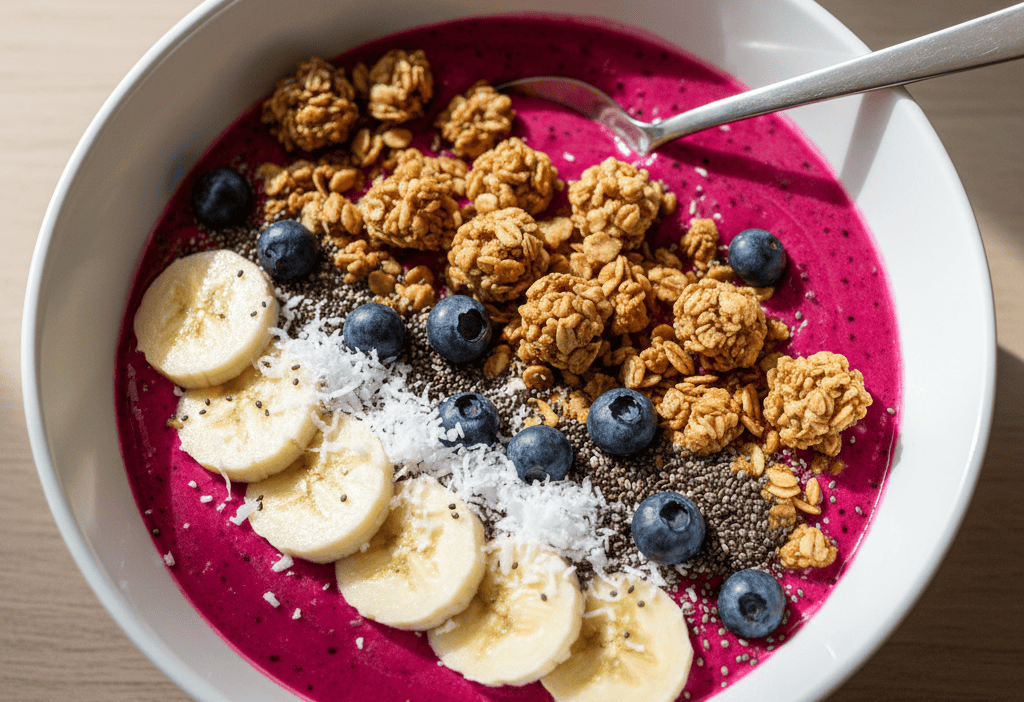
An Island Pitaya Bowl is a thick, spoonable smoothie made from frozen pitaya (dragon fruit), blended with other fruits and a touch of liquid, then topped with granola, fresh fruit, and coconut. It’s Jamba Juice’s vibrant pink answer to the acai bowl, famous for its stunning color and refreshing, tropical flavor. Pitaya itself is the fruit of several cactus species, and its popularity in bowls surged from the health-conscious cafe trend, offering a dairy-free, vitamin-rich breakfast or snack. According to the Produce for Better Health Foundation, incorporating brightly colored fruits like pitaya is a great way to add antioxidants to your diet.
Why You’ll Love This Homemade Version
You’ll love this recipe because it saves you serious money and delivers superior freshness. When I make it at home, I know my pitaya packet hasn’t been sitting in a thawing freezer all day, which can water down the texture. I also get to pick my favorite granola and adjust the sweetness exactly to my taste—sometimes I want it tangier, sometimes sweeter. Most importantly, you can make it in the time it takes to drive to Jamba, park, and stand in line. Drink Attitude’s copycat version costs about $0.80 a cup versus $5.45 at the cafe, a savings that adds up fast if this is your regular treat.
What Ingredients Do You Need and Why?
Every ingredient here has a purpose for texture and flavor. Let’s break it down.
The Core Frozen Components
Frozen Pitaya Packets (1 cup): This is the star. You want 100% pure pitaya, no added sugar or juice blends. I buy the Pitaya Plus or Sunfood brand frozen packs from the freezer aisle at Whole Foods or Target. The freeze is crucial for thickness. If you can’t find packets, buy fresh red dragon fruit, cube it, and freeze it solid on a tray overnight. Substitution: For a different color, use frozen acai puree packets, but the flavor will be more berry-forward and less tangy.
Frozen Mango Chunks (1/2 cup): Mango is the secret weapon for creaminess and natural sweetness. It blends into a lush, smooth base that banana alone can’t achieve. Frozen pineapple chunks work in a pinch, but mango is my go-to.
Frozen Banana Chunks (1/2 cup): The banana adds body, a familiar sweetness, and helps bind everything. Always use frozen—it’s non-negotiable for a thick bowl. Peel and chunk ripe bananas before freezing.
The Liquid & Sweetener
Unsweetened Almond Milk (3-4 tbsp): We use just enough to get the blender moving. I prefer almond milk for its neutral flavor, but any unsweetened plant milk works. Start with 3 tablespoons and only add the fourth if your blender is truly struggling. Too much liquid makes a smoothie, not a bowl.
Agave Nectar or Honey (1 tsp, optional): This is your adjustment tool. Taste after blending. If your fruit isn’t super ripe, a teaspoon of agave (my preference for a vegan bowl) or honey perfects the balance. I often skip it if my mango is perfect.
The Toppings (The Best Part)
Here’s where you shine. My classic trio is:
– Granola (1/3 cup): For crunch. I love Purely Elizabeth or a simple almond butter granola.
– Fresh Banana Slices (1/2 a banana): For a soft texture contrast.
– Unsweetened Shredded Coconut (1 tbsp): For tropical aroma and a little chew.
– Optional Extras: Chia seeds, sliced strawberries, a drizzle of nut butter, or a few blueberries.
What Equipment Is Necessary?
You need a high-speed blender like a Vitamix, Blendtec, or Ninja. A weak blender will struggle with the frozen fruit and require too much liquid, ruining the texture. A tamper is incredibly helpful to push the fruit down without stopping the blender. You’ll also need a rubber spatula to scrape every last bit into your bowl and a strong bowl—chilled ceramic or stainless steel keeps it cold longer.
How Do You Get the Perfect Thick Texture?
This is the barista skill you need to master. First, add your liquids (almond milk, agave) to the blender before the frozen fruit. This creates a vortex that pulls the solids down. Then, add the frozen fruit chunks. Start on low and use the tamper immediately to press the fruit into the blades. Only increase speed once it starts moving. Blend in short, powerful bursts, tamping between each. Stop the second it looks like a thick, spreadable sorbet with no visible chunks. If it’s too thick to move, add liquid one teaspoon at a time, not a tablespoon. Over-blending warms and melts it.
What Are Some Great Flavor Variations?
Once you master the base, play with it! Pineapple Paradise: Swap mango for frozen pineapple and add 1 tsp of coconut cream to the blend. Top with macadamia nuts. Green Power: Add a large handful of fresh spinach to the blender—you won’t taste it, but you get the greens. Protein Punch: Blend in a scoop of unflavored or vanilla plant-based protein powder. Increase liquid by 1 tbsp. Berry Pitaya: Add 1/4 cup frozen strawberries to the base for a deeper pink and berry twist. Creamy Dream: Replace 2 tbsp almond milk with plain, thick coconut yogurt for extra tang and creaminess.
How Does This Compare to the Real Jamba Bowl?
Let’s be honest. On taste, this homemade version is fresher and often more flavorful because we use a higher ratio of premium frozen fruit to liquid. Jamba’s version can sometimes be icier or sweeter from added juices. The texture, when you follow my method, is identical—thick and scoopable. The cost difference is the real win. Drink Attitude’s recipe uses a $4 pack of pitaya that makes 3 bowls, a $3 bag of frozen mango for 6 servings, and a $0.50 banana. Your per-bowl cost is around $0.80, plus toppings. A Jamba Island Pitaya Bowl costs about $7.45 before tax in most US cities. You’re saving nearly 90%, and you have full control. As noted by Drink Attitude, the primary difference is economic: homemade offers drastic savings without sacrificing quality.
What’s the Nutrition and How Can I Make It Lighter?
A bowl like this is packed with vitamin C, fiber from the fruit and granola, and healthy fats from coconut. My recipe as written is about 350-400 calories, depending on toppings. To make it lighter: omit the agave, use a lower-sugar granola (or just 2 tbsp), and increase the pitaya or add spinach for volume. For a higher-protein meal, the protein powder variation is key. Remember, this isn’t a low-carb food; the energy comes from natural fruit sugars and complex carbs in the granola, making it an excellent pre- or post-workout fuel.
Can You Store or Make It Ahead?
You can freeze the blended base for up to a month. Blend it, spread it in a parchment-lined container, freeze solid, then cut into portions. To serve, let it thaw in the fridge for 30 minutes or break it up and re-blend briefly with a teaspoon of liquid. Do not store the assembled bowl with toppings—they get soggy. Instead, prep topping kits in small containers and blend the base fresh, or thaw a pre-portioned base. The texture is best fresh, but the frozen base is a fantastic shortcut.
What Should You Serve With a Pitaya Bowl?
This bowl is a complete meal on its own, but I often pair it with a simple cold brew coffee for a caffeine boost. The bitter notes of coffee contrast beautifully with the sweet, tropical bowl. For a bigger brunch, serve it alongside savory items like scrambled eggs or avocado toast to balance the meal. It also makes a fantastic, refreshing dessert after a spicy lunch.
🥤 Homemade Island Pitaya Bowl
A thick, creamy, and tropical copycat of the Jamba Juice favorite, ready in minutes.
Prep: 5 min •
Total: 5 min •
Serves: 1 bowl • ~380 kcal
Ingredients
- 1 cup (about 100g) frozen pitaya (dragon fruit) chunks or puree packet
- 1/2 cup frozen mango chunks
- 1/2 cup frozen banana chunks
- 3-4 tablespoons unsweetened almond milk
- 1 teaspoon agave nectar or honey (optional, to taste)
- 1/3 cup granola, for topping
- 1/2 fresh banana, sliced, for topping
- 1 tablespoon unsweetened shredded coconut, for topping
Instructions
- Add the 3 tablespoons of almond milk and the optional agave to the base of your high-speed blender.
- Add the frozen pitaya, frozen mango, and frozen banana on top of the liquid.
- Secure the lid and insert the tamper. Start blending on low speed, using the tamper immediately to press the fruit into the blades.
- Once the mixture begins to move, increase to medium-high speed and blend in short, 5-second bursts, using the tamper continuously, until the mixture is completely smooth and has a thick, sorbet-like consistency. If absolutely necessary, add the remaining 1 tbsp of almond milk in 1-tsp increments to help it blend.
- Use a spatula to scrape the thick pitaya base into a chilled bowl immediately.
- Top with granola, fresh banana slices, and shredded coconut. Serve right away with a spoon.
Frequently Asked Questions
Can I make this recipe without a high-speed blender?
It’s very challenging. A standard blender will likely need too much liquid to process the frozen fruit, resulting in a runny smoothie, not a thick bowl. If you must try, use slightly less frozen fruit and be prepared to stop and stir frequently.
Where can I buy frozen pitaya?
Look in the frozen fruit aisle of major grocery stores like Whole Foods, Target, Walmart, or Sprouts. Brands like Pitaya Plus, Sunfood, and Dole sometimes offer it. You can also order it online from retailers like Amazon or Thrive Market.
Is this pitaya bowl recipe vegan?
Yes, if you use agave nectar instead of honey and choose vegan-friendly granola (check for honey). All other core ingredients are plant-based.
Can I use fresh fruit instead of frozen?
No. Using fresh fruit will create a drinkable smoothie, not a spoonable bowl. The frozen texture is non-negotiable for the authentic, thick consistency.
How can I add more protein to this bowl?
Blend in a scoop of unflavored or vanilla plant-based protein powder, or serve it with a side of Greek yogurt. You can also top it with a tablespoon of nut butter or hemp seeds.
Why is my pitaya bowl turning out too runny?
The most common reasons are: using fresh (not frozen) fruit, adding too much liquid, or over-blending which generates heat and melts the mixture. Always start with the minimum liquid and blend just until combined.
Can I use acai instead of pitaya?
Absolutely. Use an unsweetened frozen acai puree packet. The flavor will be more berry-like and less tangy than pitaya, but the method and toppings remain the same.
How long can I store a prepared pitaya bowl?
The assembled bowl is best eaten immediately. You can store the blended base alone in an airtight container in the freezer for up to a month. Thaw in the fridge for 30 minutes before serving.