
The Jamba Island Pitaya Bowl is a stunning, sweet-tart smoothie bowl you can absolutely make at home for roughly $1.75 versus the $6+ you’d pay in-store. As a home barista who loves a colorful, nutritious breakfast, I’ve perfected this copycat to deliver the same vibrant pink hue and creamy, scoopable texture Jamba is known for, but with total control over your ingredients and sweetness. You’re not just saving money—you’re getting a fresher, potentially healthier bowl you can customize endlessly.
- Tastes like the Jamba original: sweet, tart, and vibrantly pink.
- Costs about $1.75 per bowl versus over $6 at the cafe.
- Ready in just 5 minutes with a good blender.
- The secret is using frozen pitaya and banana for the perfect thick, scoopable texture.
What Is a Jamba Island Pitaya Bowl?
Jamba Juice’s Island Pitaya Bowl is a thick, spoonable smoothie made from pitaya (dragon fruit), blended with bananas and other fruits, and topped with granola, coconut, and more fruit. Pitaya, the star ingredient, is a tropical cactus fruit known for its shocking magenta flesh and mild, slightly sweet flavor often compared to a cross between a kiwi and a pear. While Jamba didn’t invent the smoothie bowl, their version helped popularize pitaya in the US market, making this vibrant fruit a breakfast and snack staple. You can learn more about the fruit’s origins and nutritional profile from a reputable source like Harvard T.H. Chan School of Public Health.
Why You’ll Love This Homemade Version
Beyond the significant cost savings, making this bowl at home puts you in the driver’s seat. You control the sugar—Jamba’s blend often includes apple juice and cane sugar, but we’ll achieve perfect sweetness naturally. You can choose organic fruits, a dairy-free milk you love, or boost the protein. The process is also incredibly fast; from freezer to bowl takes about five minutes, making it a realistic busy-morning option. Drink Attitude’s copycat version costs about $1.75 a bowl versus the $6.45 national average at Jamba Juice, a savings that adds up fast if this is your weekly treat.
What Ingredients You’ll Need (And Why)
Every ingredient here has a specific job in recreating that iconic Jamba bowl texture and taste. Here’s your shopping list with my notes.
- Frozen Pitaya (Dragon Fruit) Packets (1 cup): This is non-negotiable for color and flavor. Frozen pitaya gives the bowl its signature thick, almost sorbet-like consistency. I use the Pitaya Plus brand frozen packs found in the freezer aisle at stores like Whole Foods or Target. They’re pure, unsweetened pitaya puree. Substitution: If you can’t find frozen pitaya, buy fresh red dragon fruit, cube it, and freeze it solid overnight. The texture might be slightly grainier.
- Frozen Banana (1/2 medium): The other texture hero. Frozen banana adds incredible creaminess and natural sweetness, eliminating the need for added sweeteners. Slice a ripe banana and freeze the chunks on a tray before bagging them.
- Frozen Mango Chunks (1/2 cup): Adds body, tropical flavor, and helps thicken. Frozen pineapple also works beautifully here.
- Unsweetened Vanilla Almond Milk (1/3 cup): Just enough liquid to get the blender moving without making the bowl soupy. I prefer almond milk for its neutral flavor, but any milk works. For a creamier result, use canned coconut milk or oat milk.
- Fresh Lime Juice (1 tsp): The secret weapon! A tiny bit of acidity from fresh lime brightens all the fruit flavors and cuts through the sweetness, mimicking the balanced taste of the original.
Essential Equipment for the Perfect Texture
You don’t need a commercial blender, but you do need one with enough power to crush frozen fruit into a smooth, thick paste. A high-speed blender like a Vitamix, Blendtec, or Ninja is ideal. A standard blender can work if you pause to stir and use a tamper, but you may need to add a touch more liquid, risking a thinner bowl. You’ll also need a rubber spatula to scrape every last bit of that vibrant puree into your bowl and a strong spoon for eating.
Step-by-Step Tips for Nailing the Jamba Texture
Getting that thick, scoopable consistency Jamba is famous for is all about technique. First, always use frozen fruit straight from the freezer; never thaw it. Add your liquids to the blender pitcher first, followed by the softer frozen fruits (like banana and mango), and put the hardest, iciest item (the pitaya packet) on top. This helps the blades grab everything. Start on low speed and use the tamper to press the ingredients into the blades. Only increase speed once a thick paste forms. If it absolutely won’t blend, add liquid one tablespoon at a time. You want a texture that holds its shape when scooped.
Flavor Variations to Make It Your Own
Once you’ve mastered the base, the canvas is yours. Try these twists:
- Protein Power Bowl: Add a scoop of unflavored or vanilla plant-based protein powder with the fruit.
- Tropical Green Bowl: Add a big handful of fresh spinach or kale; the pitaya’s color will hide the green perfectly.
- Creamy Coconut Bowl: Replace the almond milk with light canned coconut milk and add 1 tablespoon of unsweetened shredded coconut to the blend.
- Berry Pitaya Bowl: Swap the mango for 1/2 cup of frozen strawberries or mixed berries for a berry-dragon fruit fusion.
- Chocolate Drizzle Bowl: Blend as normal, then drizzle the finished bowl with melted dark chocolate or a nut butter.
How This Copycat Compares to the Original Jamba Bowl
Let’s break down the two biggest factors: taste and cost. Taste: Side-by-side, this homemade version is strikingly similar. It has the same vibrant pink color, sweet-tart flavor profile, and luxurious thickness. The main difference is a slightly fresher, fruit-forward taste since we’re not using any concentrated juices or added sugars. Cost: This is where the home version wins decisively. According to Drink Attitude’s ingredient cost analysis, this homemade bowl averages $1.75 per serving. The official Jamba Juice menu lists their bowls starting at around $6.45 before tax. You’re saving over $4 per bowl and getting more control.
Nutrition & How to Make It Lighter or More Substantial
This bowl is naturally packed with vitamins, fiber from the fruit, and healthy fats from the toppings. The base recipe (without toppings) is roughly 210 calories. To make it lighter, use unsweetened coconut water instead of almond milk and skip the granola topping, opting for just fresh fruit. To make it a more substantial meal, add a scoop of protein powder (adds ~100-120 calories) or a tablespoon of chia seeds or almond butter (adds ~70-100 calories) to the blend. Drink Attitude’s recipe uses only whole fruits and unsweetened milk, making it a nutrient-dense choice compared to versions with added sweeteners.
How to Store It & Make Ahead
Smoothie bowls are best enjoyed immediately. However, you can store a blended bowl in an airtight container in the freezer for up to 1 month. When ready to eat, let it thaw on the counter for 15-20 minutes, then give it a vigorous stir. For a true make-ahead solution, prep single-serving smoothie packs: portion the exact amounts of frozen pitaya, banana, and mango into individual freezer bags. In the morning, dump a bag into your blender with the almond milk and lime juice and blend.
What to Serve With Your Pitaya Bowl
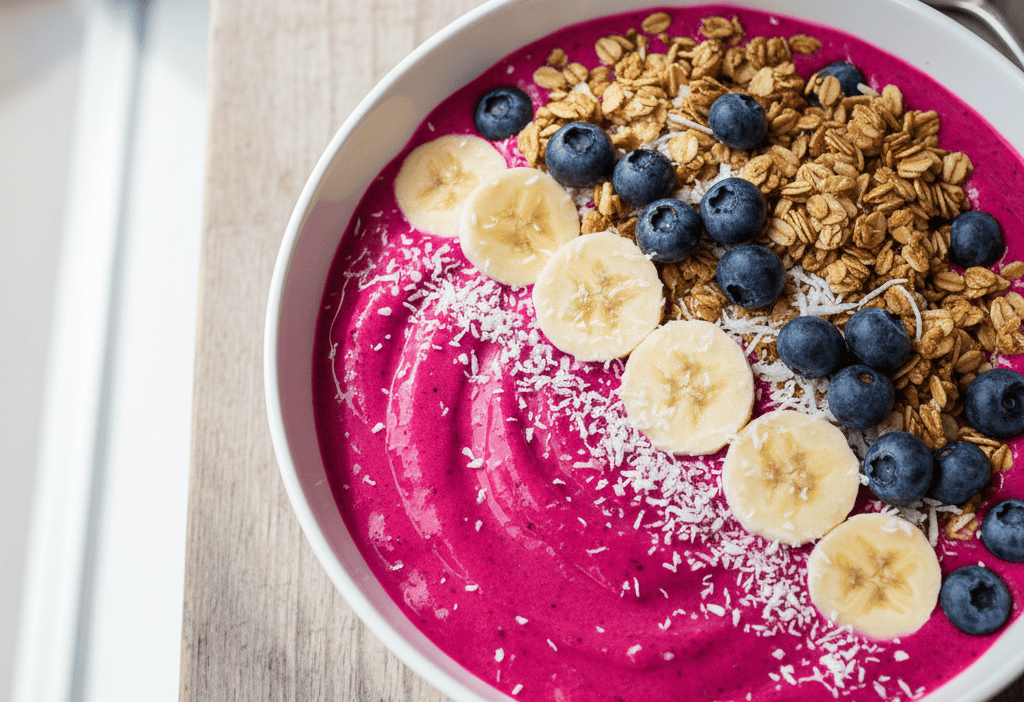
The toppings are half the fun! I mimic Jamba’s classic setup: a handful of crunchy granola (I love Purely Elizabeth brand), a sprinkle of unsweetened coconut flakes, sliced banana, and a few blueberries. Other fantastic pairings include sliced strawberries, kiwi, a drizzle of honey or agave, hemp seeds, cacao nibs, or a spoonful of nut or seed butter. Serve it with a strong cup of black coffee or a glass of cold water for the ultimate cafe-style breakfast at home.
🥤 Homemade Island Pitaya Smoothie Bowl
A creamy, vibrant copycat of the Jamba Juice classic, ready in 5 minutes.
Prep: 5 min •
Total: 5 min •
Serves: 1 bowl • ~210 kcal
Ingredients
- 1 cup (about 100g) frozen pitaya (dragon fruit) chunks or puree packet
- 1/2 medium banana, sliced and frozen
- 1/2 cup frozen mango chunks
- 1/3 cup unsweetened vanilla almond milk
- 1 teaspoon fresh lime juice
Instructions
- Add the almond milk and lime juice to the base of a high-speed blender.
- Add the frozen banana and mango chunks next, then place the frozen pitaya on top.
- Secure the lid. Start the blender on low speed, using the tamper to press the ingredients into the blades.
- Once a thick paste forms, gradually increase speed to high. Blend for 45-60 seconds until completely smooth and creamy, scraping down sides if needed.
- Pour the thick smoothie into a bowl. It should hold its shape and not be runny.
- Immediately add your desired toppings and enjoy with a spoon.
Frequently Asked Questions
Can I make this pitaya bowl without a high-speed blender?
Yes, but it’s trickier. Use a standard blender, but let the frozen fruit sit out for 5 minutes first. Pulse frequently, stop to stir and press down with a spatula, and be prepared to add an extra tablespoon or two of liquid if it seizes.
Where can I buy frozen pitaya?
Look in the freezer aisle of major grocery stores like Whole Foods, Target, or Walmart, often near frozen fruits or acai. Brands include Pitaya Plus, Sambazon, or Dole. You can also find it online.
Is pitaya the same as acai?
No. While both are used in smoothie bowls, pitaya (dragon fruit) is milder, sweeter, and vibrantly pink. Acai is deep purple, has a richer, berry-chocolate flavor, and is often more tart.
Can I use fresh dragon fruit instead of frozen?
For a true smoothie bowl texture, you need frozen fruit. If using fresh, you must freeze the cubed flesh solid overnight, and the result may be slightly icier. Using a fresh banana will make the bowl too thin.
How do I make this bowl vegan?
This recipe is naturally vegan as written. Just ensure your almond milk and any toppings (like granola) are vegan-friendly.
Why is my smoothie bowl too runny?
The most common cause is using fruit that isn’t fully frozen, adding too much liquid, or over-blending. Always use fruit straight from the freezer and measure your milk precisely. If it’s runny, you can pour it back into the blender with a few more frozen banana chunks.
Can I make a big batch for meal prep?
Blending bowls in advance leads to a separated, watery texture. For meal prep, make individual ingredient packs: portion the frozen fruits into bags. Each morning, just dump one bag into the blender with the milk and lime juice.
What’s the best milk to use for a creamy texture?
For maximum creaminess, use canned coconut milk (light or full-fat) or oat milk. Almond milk works well for a lighter result.