


Make cà phê sữa đá at home by stirring 2–3 tablespoons of sweetened condensed milk into a glass, brewing a concentrated shot of strong coffee directly over it using a Vietnamese phin filter, then pouring the mixture over a full glass of ice. That’s the whole drink. The phin is the traditional method and produces the richest, most authentic result. If you don’t own one, a double espresso or a moka pot brew gets you 90% of the way there.
Quick-start recipe (1 serving):
- Coffee: about 2 tablespoons (14–20 g) of dark-roast ground coffee
- Water: about 4 ounces (100–120 ml) of hot water, 195–205°F
- Condensed milk: 2–3 tablespoons of sweetened condensed milk
- Ice: 1 full glass
No phin? Pull a double espresso (1–2 oz) and stir it straight into the condensed milk. No condensed milk? A teaspoon of sugar plus a splash of heavy cream is a rough stand-in, though the drink won’t have the same caramelized sweetness.
Table of Contents
- What ingredients do you need for Vietnamese iced coffee?
- What equipment do you need, and which method is right for you?
- How to make Vietnamese iced coffee with a phin filter
- Quick methods: espresso, moka pot, and AeroPress
- What are the main variations of Vietnamese coffee?
- Troubleshooting your phin brew and common mistakes to avoid
- How to serve, store, and scale your Vietnamese iced coffee
- Key Takeaways
- The phin is simpler than you think
- More copycat café drinks worth making at home
- Useful sources
What ingredients do you need for Vietnamese iced coffee?
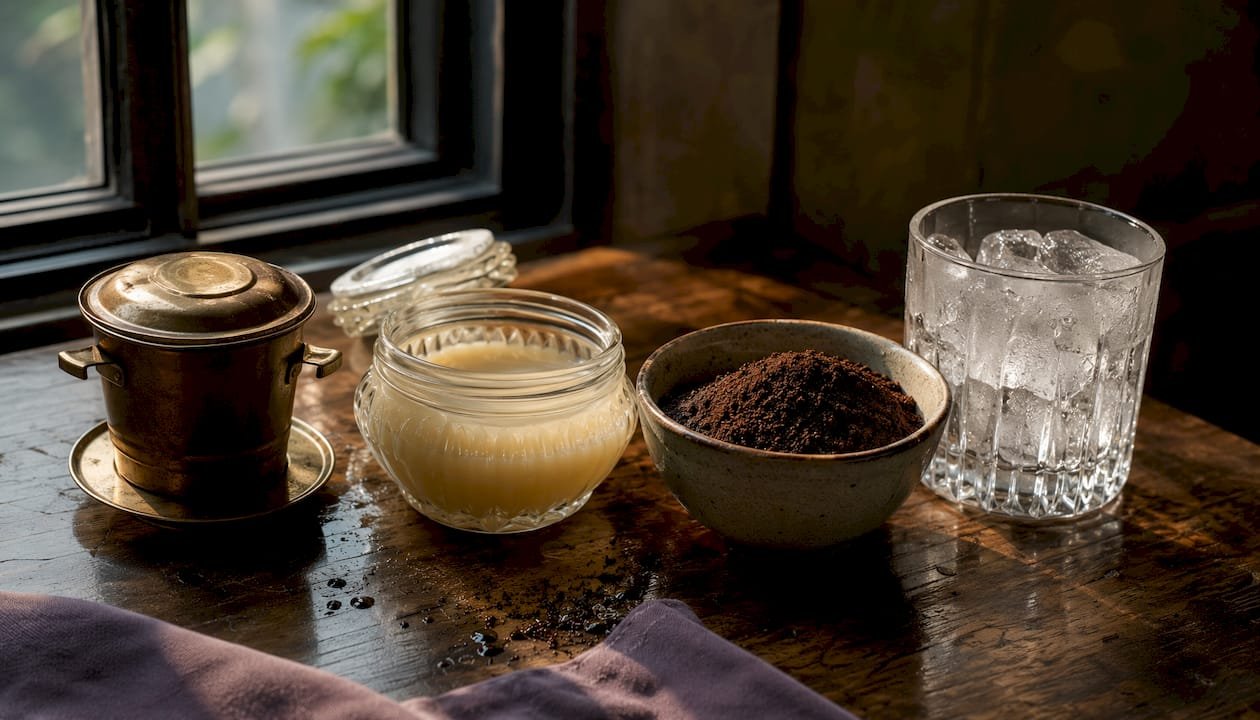
- Ground coffee: about 2 tablespoons (14–20 g) per serving. Traditional Vietnamese coffee uses 100% robusta beans, which brew darker and more bitter than arabica. In the U.S., look for Trung Nguyen, Café Du Monde (chicory blend), or any dark-roast robusta or robusta-arabica blend. A standard dark-roast arabica works too; the flavor will be slightly lighter.
- Hot water: about 4 ounces (100–120 ml) per serving, heated to 195–205°F. Boiling water at 212°F can make the coffee harshly bitter.
- Sweetened condensed milk: 2–3 tablespoons per serving. Eagle Brand and Carnation are the most common U.S. options. Traditional Vietnamese recipes often call for Ong Tho or Southern Star brands, available at Asian grocery stores. Start with 2 tablespoons and add more after tasting.
- Ice: A full glass. Use larger cubes when possible; they melt slower and dilute the drink less.
Sweetened condensed milk provides the thick, caramelized sweetness that defines this drink. Swapping it for regular milk or oat milk produces a different drink entirely.
What equipment do you need, and which method is right for you?
The Vietnamese phin filter
A phin is a small stainless-steel single-serve drip filter that sits directly on top of a glass. No paper filter, no electricity, just gravity. It produces a slow, concentrated brew with a syrupy body that holds up beautifully against sweetened condensed milk and ice. A standard small phin filter is widely available at affordable prices. Look for stainless steel with a tight-fitting lid and a gravity press insert (not a screw-down press, which is harder to control).
Pro Tip: Preheat the phin by flushing it with a small amount of hot water before adding your grounds. The metal absorbs heat quickly, and skipping this step can drop your brew temperature mid-drip, leading to uneven extraction.
Alternatives and what they deliver
- Espresso machine: Fastest option. Pull a double ristretto or double espresso (1–2 oz) and stir it directly into the condensed milk. Strong, quick, and very close to the phin profile.
- Moka pot: Brews a concentrated, espresso-adjacent coffee. Use the same condensed milk ratio. Moka pot and AeroPress are both solid phin alternatives when you need a stronger concentrate without the wait.
- AeroPress (inverted method): Dial it for concentrate by using a higher coffee-to-water ratio and a 2–3 minute steep. Produces a clean, strong cup.
- French press: Brew strong (1:8 coffee-to-water ratio) and steep for 4 minutes. The closest substitute in terms of contact time, though the cup will be slightly less syrupy than a phin.
How to make Vietnamese iced coffee with a phin filter
This method takes about 10 minutes total, most of which is hands-off drip time.
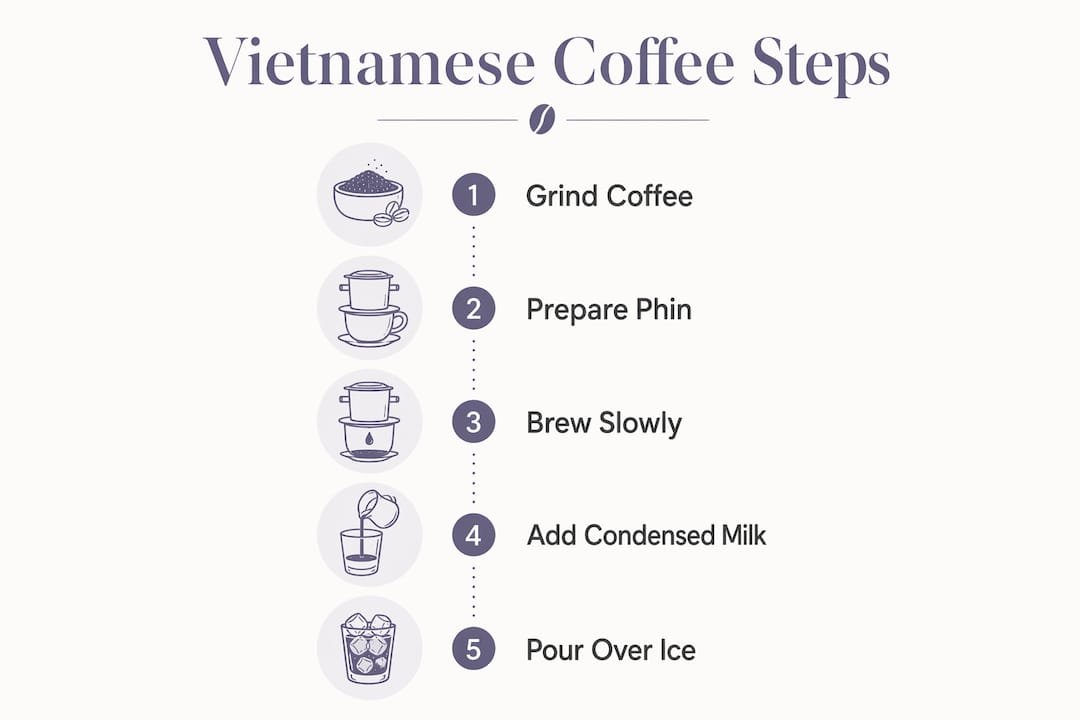
- Preheat the phin. Pour a small amount of hot water through the empty phin to warm the metal, then discard it.
- Add condensed milk. Spoon 2–3 tablespoons of sweetened condensed milk into the bottom of your glass or cup.
- Load the coffee. Add 14–20 g (about 2 tablespoons) of medium-coarse ground coffee (texture similar to table salt) into the phin chamber. Shake gently to level the grounds. Do not tamp.
- Set the gravity press. Place the perforated press disc on top of the grounds with a light, snug fit. Don’t press hard. The coffee needs room to expand during the bloom.
- Bloom the grounds. Pour about 20–30 ml of hot water over the press and let it sit for 30–60 seconds. You’ll see the grounds puff up slightly as CO2 releases. This step prevents flat, uneven extraction.
- Fill the chamber. Pour the remaining water (to reach 100–120 ml, or 4 ounces total) into the phin and place the lid on top to retain heat.
- Wait. The ideal drip time is 4–6 minutes. Watch the drip rate; it should be a slow, steady stream, not a trickle and not a pour.
- Remove the phin. Once dripping stops, lift the phin off the glass and set it aside.
- Stir. Mix the coffee and condensed milk thoroughly until fully combined.
- Add ice. Let the coffee cool for 1–2 minutes, then pour over a glass packed with ice. Stir once more and serve immediately.
Pro Tip: Pour the coffee over the back of a spoon when adding it to the ice glass. It slows the pour and reduces immediate dilution, keeping the drink colder and stronger for longer.

Quick methods: espresso, moka pot, and AeroPress
When you want the drink in under five minutes, any of these methods produces a concentrate strong enough to mix with condensed milk and taste close to the phin version. The key is matching the concentrate volume and strength. Typical concentrate volumes vary by method but produce sufficient strength for mixing with condensed milk.
For all shortcuts, stir the concentrate immediately into the condensed milk while it’s still hot so the milk dissolves fully. Then cool slightly before adding ice. If the result tastes too weak, reduce the water next time rather than adding more coffee, since more grounds without adjusting water often produces bitterness rather than strength.
If you enjoy espresso-based iced drinks, the Dutch Bros Golden Eagle recipe on Drinkattitude shows another great way to use a double espresso as a base.
What are the main variations of Vietnamese coffee?
- Cà phê sữa đá (iced milk coffee): The classic. Strong phin coffee, sweetened condensed milk, poured over ice. This is the recipe this article covers.
- Cà phê đen đá (black iced coffee): Same phin brew, no condensed milk, served over ice. Bitter, bold, and very caffeinated. Use the same 14–20 g (about 2 tablespoons) dose and skip the milk entirely.
- Bac xiu (Saigon milk-forward style): More condensed milk, less coffee. Roughly 3–4 tablespoons of condensed milk to a smaller coffee dose (10–12 g). The result is sweeter and lighter, closer to a dessert drink. Condensed milk dominates the flavor here, so use a high-quality brand.
- Cà phê trứng (egg coffee): A Hanoi specialty served hot. Whipped egg yolks, sugar, and condensed milk are beaten into a thick cream and spooned over a small, strong phin brew. Rich, custardy, and more dessert than beverage. It’s worth trying once you’ve mastered the basic phin method.
Troubleshooting your phin brew and common mistakes to avoid
- Drip finishes in under 3 minutes: Grind is too coarse or the press is sitting too loosely. Tighten the press slightly or grind finer next time. A fast drip means under-extraction and a weak, watery result.
- Drip takes longer than 7 minutes: Grind is too fine or the press is over-tightened. Drip time maps directly to grind size and press tension; aim for 4–6 minutes as your target window.
- Coffee tastes bitter: Water was too hot (above 205°F) or the press was screwed down too hard. Use a thermometer if possible, and remember the press only needs a light snug fit.
- Coffee tastes flat or weak: You skipped the bloom, or the grind is too coarse. The bloom stage is not optional; it releases CO2 and allows even extraction.
- Drink tastes watery after ice: You added ice too soon while the coffee was still very hot, causing rapid melting. Let the coffee cool for 1–2 minutes first.
- Condensed milk not dissolving: Stir more vigorously right after brewing while the coffee is still hot. Cold condensed milk at the bottom of a glass needs heat to incorporate fully.
Pro Tip: Treat published ratios as starting points. If the drink is consistently too strong or too mild, adjust the water volume first before changing the coffee dose. Adding 10–20 ml more water softens the concentrate without introducing bitterness.
How to serve, store, and scale your Vietnamese iced coffee
- Serving sequence matters: Always dissolve the condensed milk into the hot coffee before adding ice. Cold milk at the bottom of a glass won’t fully incorporate once ice hits.
- Minimize dilution: Let the coffee sit for 60–90 seconds after brewing before pouring over ice. Even that short wait reduces how fast the ice melts on contact.
- Storing concentrate: Brew a double or triple batch using the same ratios, skip the condensed milk, and refrigerate the plain concentrate in a sealed jar for up to 5 days. Mix with condensed milk and ice to order.
- Pitcher for a crowd: Scale up to 4 servings by using 60–80 g of coffee and 400–480 ml of water in a French press or large AeroPress. Brew strong, cool, and refrigerate. Add condensed milk per glass when serving.
- Caffeine note: Robusta beans contain roughly twice the caffeine of arabica. A single phin serving is already strong; two cups in a morning is a meaningful caffeine load.
- Calories: Two tablespoons of sweetened condensed milk add roughly 120 calories and 20 g of sugar. Adjust the amount if you’re watching intake, or use a reduced-sugar condensed milk.
Key Takeaways
The most reliable Vietnamese iced coffee starts with a medium-coarse grind, a 30–60 second bloom, and a 4–6 minute phin drip stirred into sweetened condensed milk before ice ever touches the glass.
| Point | Details |
|---|---|
| Phin or strong concentrate | Use a phin for the most authentic result; espresso, moka pot, or AeroPress are fast, acceptable alternatives. |
| Bloom every time | Saturate grounds with 20–30 ml of water for 30–60 seconds before filling the chamber to avoid flat extraction. |
| Target 4–6 minute drip | Adjust grind coarseness or press tension to hit this window; faster means weak, slower means bitter. |
| Start with 2 tbsp condensed milk | Add more after tasting; dissolve it fully into hot coffee before adding ice to avoid clumping. |
| Drinkattitude recipes | Drinkattitude covers the full phin method plus espresso shortcuts so you can make café-quality Vietnamese coffee at home. |
The phin is simpler than you think
The phin has a reputation for being fussy, and that reputation is mostly undeserved. It’s a gravity filter. There’s no pressure to manage, no pump to prime, no dial to calibrate. The two things that actually matter are grind size and water temperature, and both are easy to control once you’ve brewed a cup or two.
What I find more interesting is the broader lesson the phin teaches: patience produces better coffee. The 4–6 minute drip isn’t a flaw in the design. It’s the mechanism. That slow contact time between water and grounds is exactly what creates the syrupy, concentrated brew that survives ice and condensed milk without tasting diluted. Rushing it with water that’s too hot or a press that’s too tight doesn’t speed things up in any useful way. It just makes the coffee bitter.
The shortcuts in this article (espresso, moka pot, AeroPress) are genuinely good options for weekday mornings. But if you’ve never brewed with a phin, try it at least once on a weekend when you have ten minutes. The result is noticeably different from anything a machine produces, and the process is oddly satisfying.
More copycat café drinks worth making at home
If this recipe saved you a trip to a Vietnamese café, Drinkattitude has dozens of other copycat drinks that do the same thing for your coffee shop bill. The site specializes in step-by-step barista methods written for home cooks, covering everything from cold brew concentrates to espresso-based iced drinks. Whether you want a Dutch Bros iced coffee or something completely different, the recipes are built around common grocery ingredients and equipment most people already own. Browse the full collection at Drinkattitude and pick your next café drink to recreate at home.
Useful sources
- Vietnamese Iced Coffee — Wikipedia: Background on cà phê sữa đá, its origins in southern Vietnam, and the role of the phin filter in Vietnamese coffee culture.
- Nguyen Coffee Supply Brew Guide: Detailed phin brewing instructions with grind guidance and concentrate ratios; strong authority on robusta sourcing and U.S. availability.
- CoffeeGeek: How to Make Vietnamese Iced Coffee: Practical drip-timing diagnostics and press-tension guidance; best source for troubleshooting grind size and drip speed.
- Caffey Olly: How to Make Vietnamese Coffee at Home: Bloom technique explanation and ratio-adjustment advice; useful for extraction troubleshooting.
- My Home Barista: Vietnamese Iced Coffee: Primary measurement source for single-serve phin recipes and espresso shortcut ratios.
- My Home Espresso: Authentic Ca Phe Sua Da: Covers moka pot and AeroPress alternatives with concentrate ratios; also addresses condensed milk substitution and its flavor impact.
- Daily Phin: Vietnamese Iced Coffee Recipe: Preheat technique for the phin and temperature-stability tips for consistent extraction.