

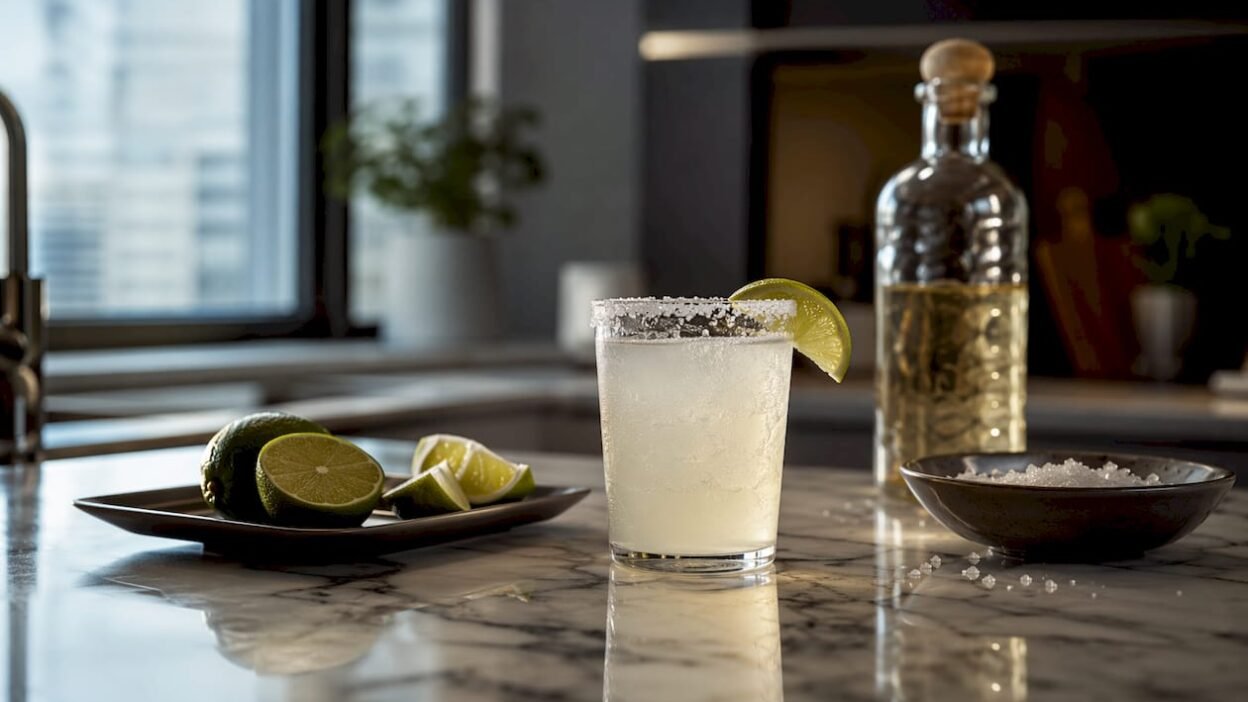
The Paloma recipe in brief: blanco tequila, fresh lime juice, and grapefruit soda, built straight in the glass. Prefer the fresher route? Swap the soda for fresh grapefruit juice plus sparkling water. Either way, you’re five minutes from one of the best grapefruit tequila cocktails you can make at home.
Quick Recipe Card
- Yield: 1 cocktail
- Prep time: ~5 minutes
- Glass: Highball or rocks
Ingredients (classic soda version):
- 100% agave blanco tequila
- fresh lime juice
- grapefruit soda (Jarritos or Squirt)
- Pinch of kosher salt (in the drink)
- Ice
- Garnish: grapefruit wedge or wheel
Fresh-juice version: replace the soda with 2 oz fresh grapefruit juice + 2 oz sparkling water, and add ¼ oz agave nectar if needed.
Method (choose one):
- Build in glass (classic): Add tequila, lime juice, and salt pinch to your glass. Stir briefly to dissolve salt. Add ice, top with grapefruit soda, and give it one gentle stir. Garnish and serve.
- Shaken (fresh-juice): Combine tequila, grapefruit juice, lime juice, salt, and optional sweetener in a shaker with ice. Shake 15–20 seconds. Fine-strain over fresh ice, top with sparkling water, and garnish.
Optional salt rim: rub a lime wedge around the glass rim, then dip in coarse salt or Tajín.
Table of Contents
- Why the Paloma is worth making tonight
- What ingredients actually make a difference
- What equipment do you actually need?
- How to make a Paloma, step by step
- Swaps and Paloma variations worth trying
- Tips that actually improve the drink
- Servings, prep time, and rough nutrition
- Key Takeaways
- Why the fresh-forward version is the one to default to
- Useful sources and further reading
- More recipes like this, all in one place
Why the Paloma is worth making tonight
The flavor hits in a specific order: bright grapefruit up front, a tart lime edge, earthy agave underneath, and a clean bubbly finish. Nothing cloying, nothing muddy. It’s the kind of drink that tastes like it took more effort than it did.
The Paloma is widely regarded as Mexico’s national cocktail, arguably more popular there than the Margarita. That cultural weight matters because it means the recipe has been stress-tested across generations of home bartenders, not just cocktail bars. The result is a drink that’s genuinely hard to ruin. Carbonation does a lot of the heavy lifting, fusing the ingredients together and masking small errors in a way that shaken-only cocktails don’t.
What ingredients actually make a difference
Tequila: blanco is the right call
Use 100% agave blanco tequila. Blanco is unaged, which keeps the agave flavor clean and bright — exactly what grapefruit needs as a partner. Reposado works if that’s what you have; its mild oak rounds the drink slightly without dominating. Añejo is the one to avoid: the caramel and wood notes fight the citrus rather than complement it.
Grapefruit: soda vs. fresh juice
This is the real fork in the road. Grapefruit soda (Jarritos or Squirt) is the traditional choice. Jarritos is sweeter and cane-sugar–sweetened; Squirt is tarter and more carbonated but uses high-fructose corn syrup in the U.S., which softens the citrus edge slightly. Both are perfectly good.
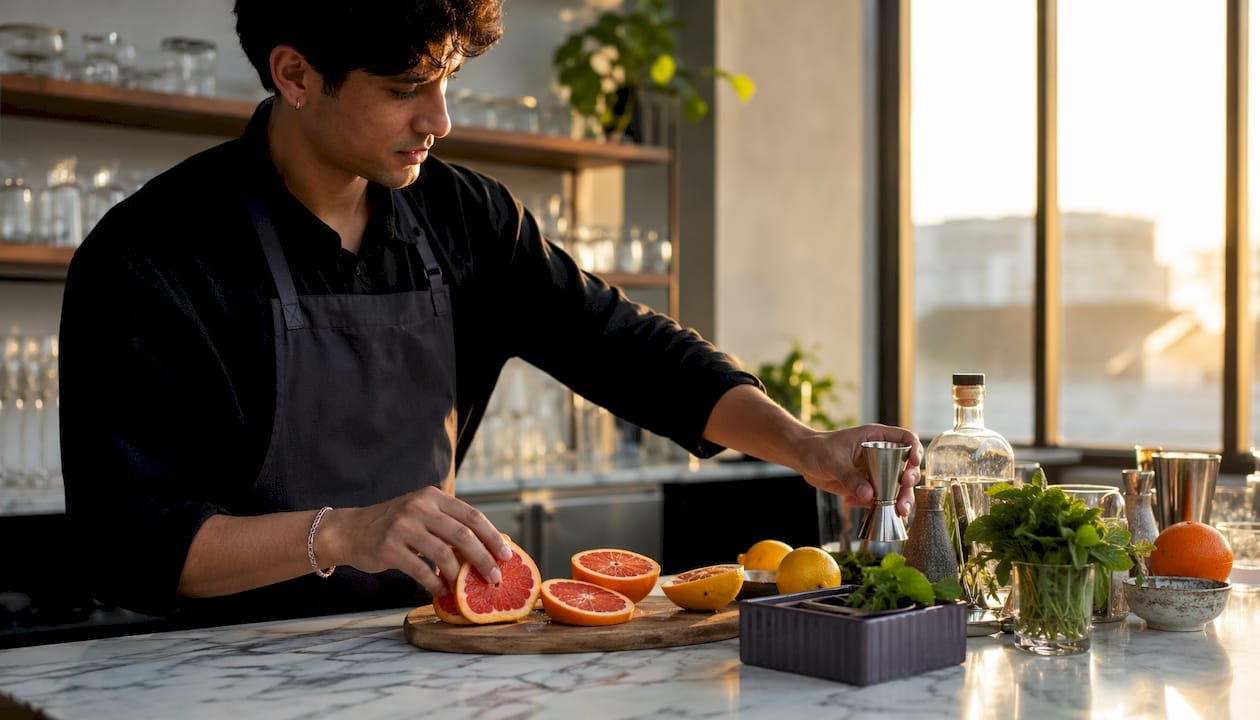
Fresh grapefruit juice with sparkling water gives you precise control over sweetness and a drier, more adult result. One medium grapefruit yields roughly 3–4 oz of juice, so you’ll need about half a fruit per drink. Bottled fresh-squeezed grapefruit juice (not from concentrate) is a solid grocery shortcut.
Other key ingredients:
- Lime juice: ½ oz adds tartness and lifts the whole drink. Fresh only.
- Salt: a small pinch inside the drink (not just on the rim) acts as a flavor bridge between the tequila and grapefruit bitterness.
- Sweetener: agave nectar or simple syrup, added only when the grapefruit is particularly tart. Start with ¼ oz and taste.
Pro Tip: Dissolve the salt pinch in the tequila and lime juice before adding ice. This distributes it evenly instead of leaving salty pockets at the bottom of the glass.
What equipment do you actually need?
For the build-in-glass version, the list is short:
- Highball or Collins glass (12–16 oz) for the classic; a rocks glass for a shorter, salt-rimmed version
- Jigger for measuring
- Bar spoon for the gentle final stir
For the shaken fresh-juice version, add:
- Cocktail shaker (cobbler or Boston)
- Fine-mesh strainer to catch pulp and ice chips
- Manual citrus juicer
No jigger? A standard shot glass holds about 1.5 oz; two-thirds full gets you close to 1 oz. A regular kitchen strainer works in place of a fine-mesh bar strainer. The Paloma is forgiving enough that imprecise tools rarely ruin it.
How to make a Paloma, step by step
Build-in-glass method (classic, 5 minutes)
- Add tequila and lime juice to your highball glass.
- Add a pinch of kosher salt and stir to dissolve.
- Fill the glass with ice.
- Pour in grapefruit soda slowly down the side of the glass to preserve carbonation.
- Give it one gentle stir from the bottom up.
- Garnish with a grapefruit wedge or wheel. Serve immediately.
Shaken fresh-juice method (fresher, ~7 minutes)
- Juice grapefruit and lime.
- Add tequila, grapefruit juice, lime juice, salt pinch, and optional agave nectar to a shaker.
- Add ice and shake for 15–20 seconds until the shaker is cold.
- Fine-strain into a fresh-ice–filled glass.
- Top with 2 oz sparkling water, poured gently.
- Garnish and serve.
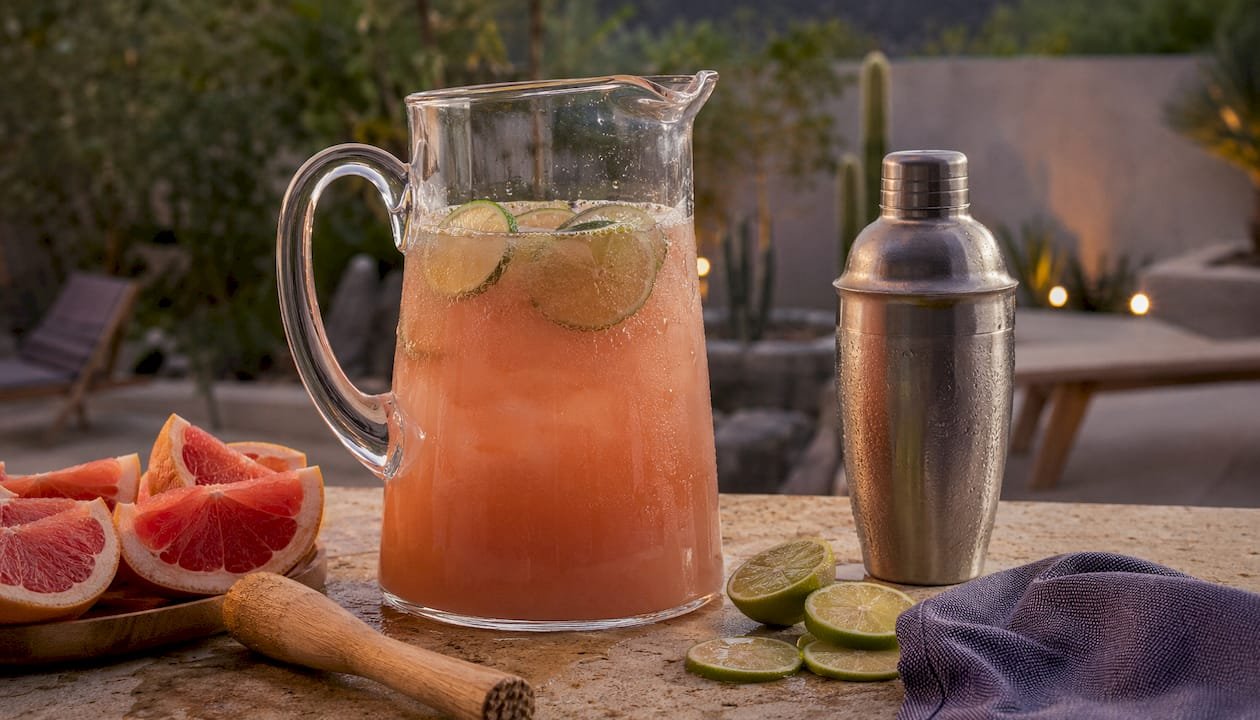
Batching for a party: premix tequila, lime juice, and any syrup in a pitcher; keep chilled. Add grapefruit soda or sparkling water per glass at service to keep the carbonation alive. Fresh grapefruit juice keeps tightly covered in the fridge for up to 48 hours.
Pro Tip: Add the sparkling water or soda last, always. Shaking or stirring aggressively after topping kills the bubbles and flattens the drink.
Swaps and Paloma variations worth trying
Easy ingredient swaps
- Mezcal in place of tequila for a smoky, earthy version
- Tajín or chili salt on the rim instead of plain kosher salt
- Honey syrup (1:1 honey and warm water) instead of agave nectar
- Blood orange juice in winter; ruby red grapefruit in summer for a sweeter, deeper color
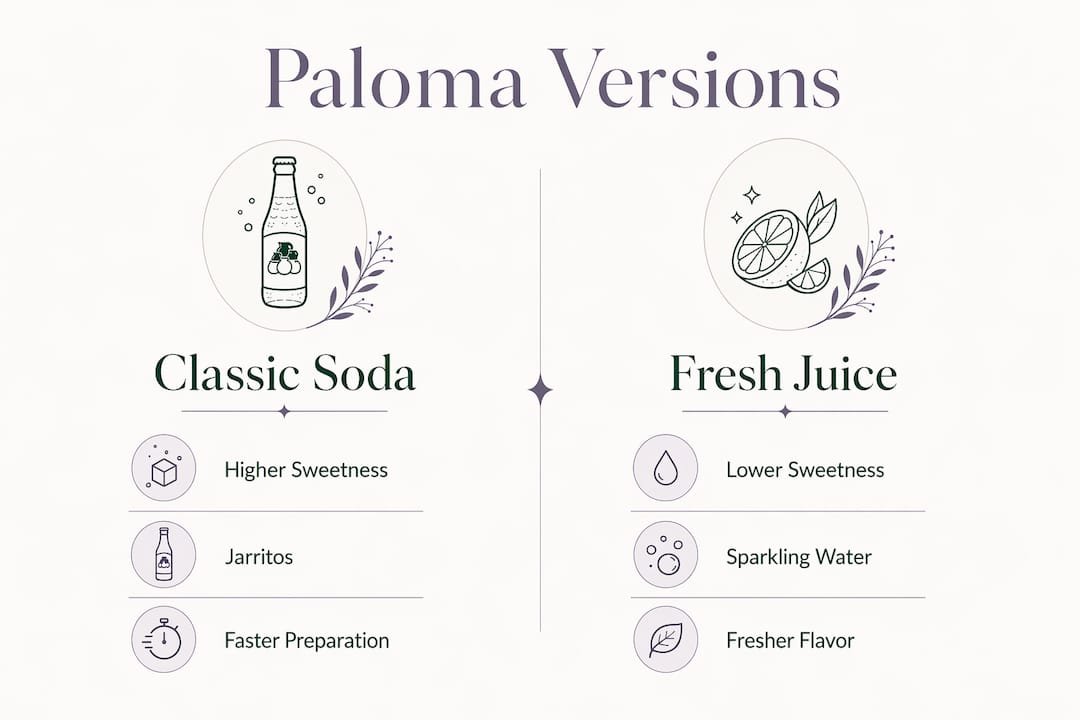
Classic soda vs. fresh juice: a quick comparison
| Grapefruit soda | Fresh juice + sparkling water | |
|---|---|---|
| Sweetness | Higher, brand-dependent | Lower, fully adjustable |
| Carbonation | Built in, consistent | Added separately, more control |
| Prep time | 2 minutes | 5–7 minutes |
| Best for | Quick weeknight drink | Entertaining, flavor precision |
Three popular variations
Spicy Paloma: muddle 2–3 jalapeño slices in the shaker before adding the other ingredients, or use a chile-infused tequila. Strain out the solids. The heat plays well against the grapefruit’s bitterness.
Smoky Paloma: build the classic version, then float ½ oz mezcal on top by pouring it slowly over the back of a spoon. You get the smoke on the nose without it taking over the whole drink.
Low-sugar Paloma: use fresh grapefruit juice and sparkling water, skip the sweetener entirely, and add a few drops of liquid stevia only if the grapefruit is especially bitter. This version is noticeably drier and works well for those watching sugar intake.
For more tropical cocktail ideas to serve alongside a Paloma spread, Drinkattitude has a full collection worth browsing.
Tips that actually improve the drink
The single biggest upgrade you can make is tequila quality. A clean 100% agave blanco highlights the citrus without adding unwanted oak or caramel notes — that’s the call bartenders make every time.
Quality checklist before you serve:
- Taste for balance: the drink should be tart, slightly sweet, and a little bitter. If it’s too bitter, add ¼ oz agave nectar. Too sweet? A few extra drops of lime juice fix it.
- Check carbonation: if it’s flat, you stirred too hard or waited too long.
- Avoid over-dilution: with the shaken version, shake 15–20 seconds and fine-strain immediately. Don’t let it sit in the shaker.
- Use cold glassware and chilled mixers when you can. A warm glass kills carbonation fast.
Pro Tip: Salt the inside of the drink before salting the rim. The in-drink pinch does more flavor work; the rim is mostly visual and textural.
For other easy cocktail recipes that use the same shaking and straining technique, Drinkattitude’s cocktail hub is a good next stop.
Servings, prep time, and rough nutrition
- Yield: 1 cocktail
- Prep time: 5 minutes (classic); ~7 minutes (fresh-juice)
Calorie estimates are approximate and vary by brand and pour size. Most of the calories come from the tequila and the sweetener or soda. The fresh-juice version without added syrup is the lighter option.
Scaling: multiply all ingredients by the number of servings. For multiple drinks, scale the tequila, lime juice, and grapefruit mixer quantities proportionally. Premix the base and add the fizz at service.
Key Takeaways
The best Paloma starts with 100% agave blanco tequila, a pinch of salt dissolved in the mix, and either grapefruit soda for speed or fresh juice plus sparkling water for precision.
| Point | Details |
|---|---|
| Use blanco tequila | 100% agave blanco keeps the citrus clean; añejo overpowers the grapefruit. |
| Salt goes in the drink | A pinch dissolved in the tequila and lime bridges bitterness and ties flavors together. |
| Soda for speed, fresh juice for control | Grapefruit soda is the 2-minute option; fresh juice + sparkling water lets you dial in sweetness. |
| Shake fresh juice, build with soda | Shake 15–20 seconds and fine-strain for the fresh version; build in the glass for the soda version. |
| Drinkattitude’s approach | Step-by-step recipes at Drinkattitude make both versions approachable for beginners and easy to scale for a crowd. |
Why the fresh-forward version is the one to default to
The grapefruit soda Paloma is genuinely good and genuinely fast. No argument there. But the fresh-juice version is the one worth learning because it puts you in control of every variable: sweetness, bitterness, carbonation level. Once you’ve made it a few times, you stop measuring the sweetener by instinct and start tasting for it. That’s the difference between following a recipe and actually understanding a drink.
The other thing people underestimate: this is one of the most beginner-friendly cocktails to step up on. Carbonation covers small errors, the ratios are forgiving, and the ingredient list is short enough that you can’t really hide behind complexity. If a Paloma tastes off, it’s almost always the tequila quality or a missing pinch of salt. Fix those two things and the drink fixes itself.
Useful sources and further reading
These are the sources used to build and verify the recipe and technique guidance above:
- Liquor.com Paloma — solid baseline recipe and cultural context; good for understanding the classic soda build.
- Bon Appétit Paloma — strong on tequila selection rationale; explains why blanco is the right call.
- Rick Bayless Fresh Grapefruit Paloma — the authoritative case for the fresh-juice upgrade and sweetener control.
- Food & Wine Classic Paloma — best explanation of the salt-in-drink technique and grapefruit soda brand differences.
- The Kitchn Paloma — precise shake time and dilution guidance for the fresh-juice method.
- VinePair Paloma — useful on the build-in-glass method and why carbonation makes the Paloma so forgiving.
More recipes like this, all in one place
Drinkattitude is built for exactly this: clear, step-by-step recipes that let you recreate great drinks at home without the bar markup. The Paloma guide above follows the same format as every recipe on the site: exact measurements, two method options, and the kind of technique notes that actually change the result.
If you liked making this, the cocktail recipe collection on Drinkattitude covers everything from citrus-forward classics to crowd-pleasing mocktails, all with the same no-fuss approach. The lemon drop recipe is a natural next step if you want to practice the shaking and straining technique from the fresh-juice Paloma. Head to Drinkattitude and pick your next drink.