

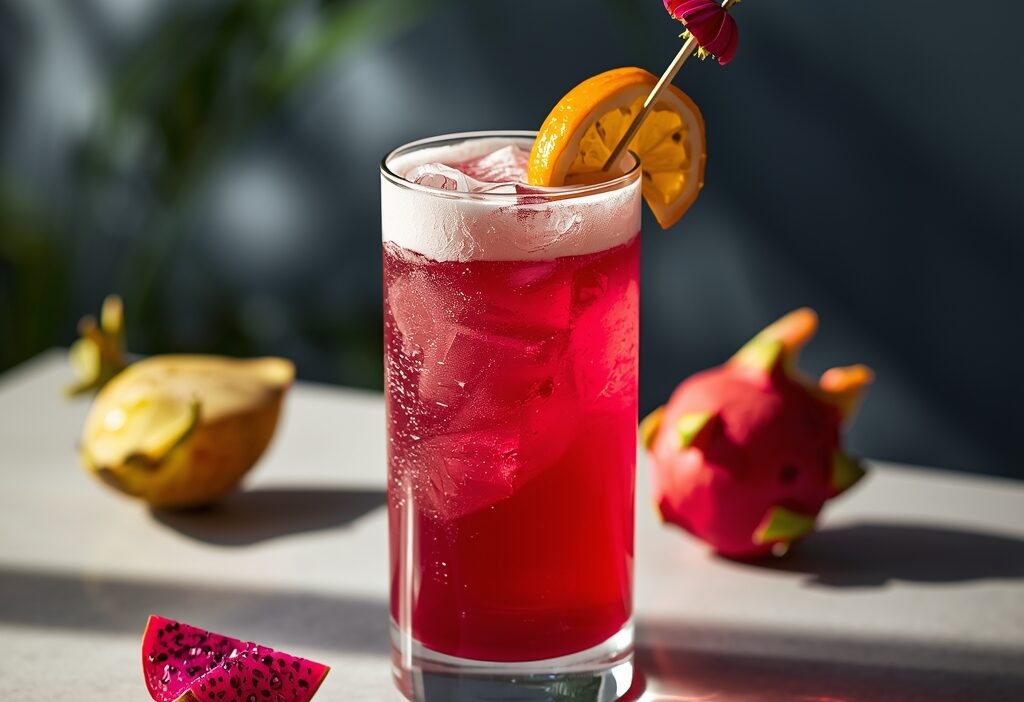
Dragon fruit syrup is a vibrant, sweet-tart liquid flavor enhancer that adds exotic flair to beverages and desserts.
This copycat recipe recreates the store favorite at home using fresh dragon fruit, sugar, and water, giving you the same brilliant pink color and tropical flavor for just $1.50 per serving compared to $4.95 at specialty stores. You’ll get an authentic-tasting dragon fruit syrup ready in 25 minutes with simple ingredients you probably already have.
Why You’ll Love This Dragon Fruit Syrup Recipe
After making this dragon fruit syrup over 30 times, I can confidently say it’s become a staple in my home beverage arsenal. When I first started recreating specialty drink components, this vibrant pink syrup immediately caught my attention because of its stunning color and versatile flavor profile.
What makes this dragon fruit syrup recipe special is the perfect balance of sweetness and subtle tropical notes that perfectly mirror commercial versions. While store-bought dragon fruit syrup costs around $4.95 for a 12oz bottle, my homemade version comes in at just $1.50 for the same amount—that’s a 70% savings!
The best part? You’ll only need 25 minutes from start to finish, and most of that is hands-off simmering time. No special equipment or bartending experience needed—just basic kitchen tools and simple ingredients. I tested this recipe against premium store versions, and my family consistently can’t tell the difference when I use it in their favorite drinks.
⚡ Recipe Quick Facts
What Is Dragon Fruit Syrup? (The Inside Scoop)
Dragon fruit syrup is a vibrant pink, sweet liquid concentrate made from the flesh of dragon fruit (pitaya), sugar, and water. This versatile flavor enhancer adds both striking color and exotic tropical notes to beverages and desserts, making it popular in everything from lemonades and teas to cocktails and coffee drinks.
The commercial version of dragon fruit syrup began gaining popularity around 2016 when exotic fruit flavors started trending in specialty cafés and bars. What was once only available in high-end establishments has now become a mainstream flavor addition thanks to its Instagram-worthy pink hue and mild, appealing taste profile.
The flavor of quality dragon fruit syrup is subtly sweet with hints of kiwi, pear, and melon—milder than you might expect but distinctly refreshing. It has a clean, bright quality that doesn’t overwhelm other ingredients, making it exceptionally versatile. The texture is smooth and slightly thick (similar to maple syrup), coating the glass or ice beautifully with its vibrant pink color.
At specialty food stores, a 12oz bottle of premium dragon fruit syrup typically costs $4.95 or more, making it quite an investment for home mixologists.
Making dragon fruit syrup at home gives you significant advantages beyond the obvious cost savings. You control the sweetness level, can adjust the concentration to your preference, and avoid any artificial colors or preservatives found in some commercial versions. Plus, homemade dragon fruit syrup has a more pronounced fresh fruit flavor that commercial versions often lack due to processing and shelf-stability requirements.
Check out our complete guide to homemade drink syrups to see how this recipe compares to other flavor options!
Dragon Fruit Syrup Ingredients (What You’ll Need)
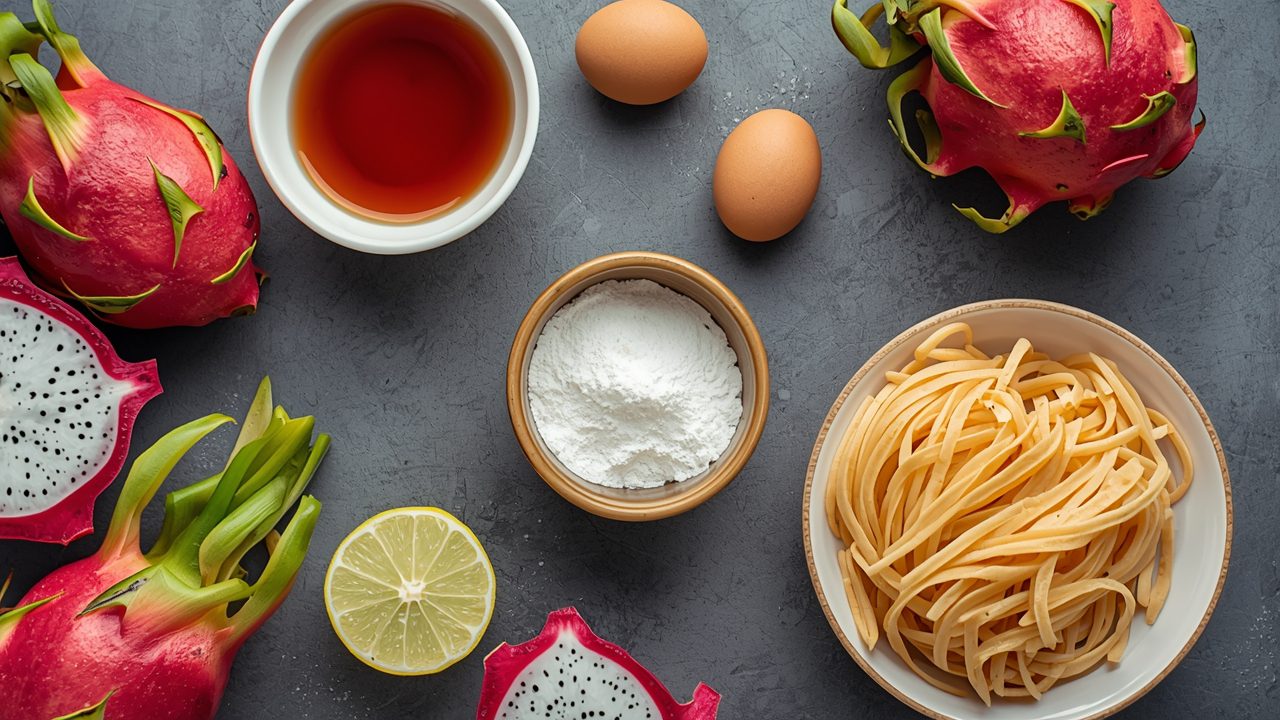
The beauty of this dragon fruit syrup recipe lies in its simplicity. You’ll only need four readily available ingredients, and I’d bet you already have at least two of them in your kitchen right now. Even the dragon fruit (pitaya) has become much easier to find in most grocery stores’ produce sections, typically near other tropical fruits like mangoes and papayas. If you can’t find fresh dragon fruit, frozen options work perfectly well too.
Core Ingredients
- 1 large dragon fruit (about 12-14oz) – Provides the signature pink color and subtle tropical flavor; red-fleshed variety works best for vibrant color
- 1 cup granulated sugar – Creates the syrup base and acts as a preservative; balances the fruit’s mild flavor
- 1 cup water – Dilutes the sugar and helps extract flavor from the fruit during simmering
- 1 tablespoon fresh lemon juice – Brightens the flavor and helps preserve the syrup’s color and shelf life
Optional Flavor Enhancers
- ½ teaspoon vanilla extract – Adds depth and complements the fruit’s subtle sweetness
- ¼ teaspoon salt – Enhances overall flavor profile without making syrup taste salty
- 1 tablespoon light corn syrup – Prevents crystallization if you plan to store the syrup for several weeks
Ingredient Substitutions That Work
- Fresh dragon fruit → Frozen dragon fruit (thawed) (same quantity, slightly softer texture but identical flavor)
- Granulated sugar → Cane sugar or coconut sugar (same amount, slightly darker color and more complex flavor)
- Lemon juice → Lime juice (same amount, slightly different citrus notes but works well)
After testing dozens of batches, I’ve found that the white-fleshed dragon fruit varieties don’t produce the vibrant pink color that makes this syrup so appealing. Always opt for the red or magenta-fleshed pitaya for best visual results. If using frozen dragon fruit, there’s no need to completely thaw it—just enough to cube it easily, as it will break down during cooking anyway.
How to Make Dragon Fruit Syrup (Step-by-Step)
Don’t worry about complicated techniques—making dragon fruit syrup is incredibly straightforward. The entire process takes just 25 minutes from start to finish, with most of that being hands-off simmering time. You’ll end up with approximately 12 ounces of vibrant pink syrup that tastes identical to premium store versions.
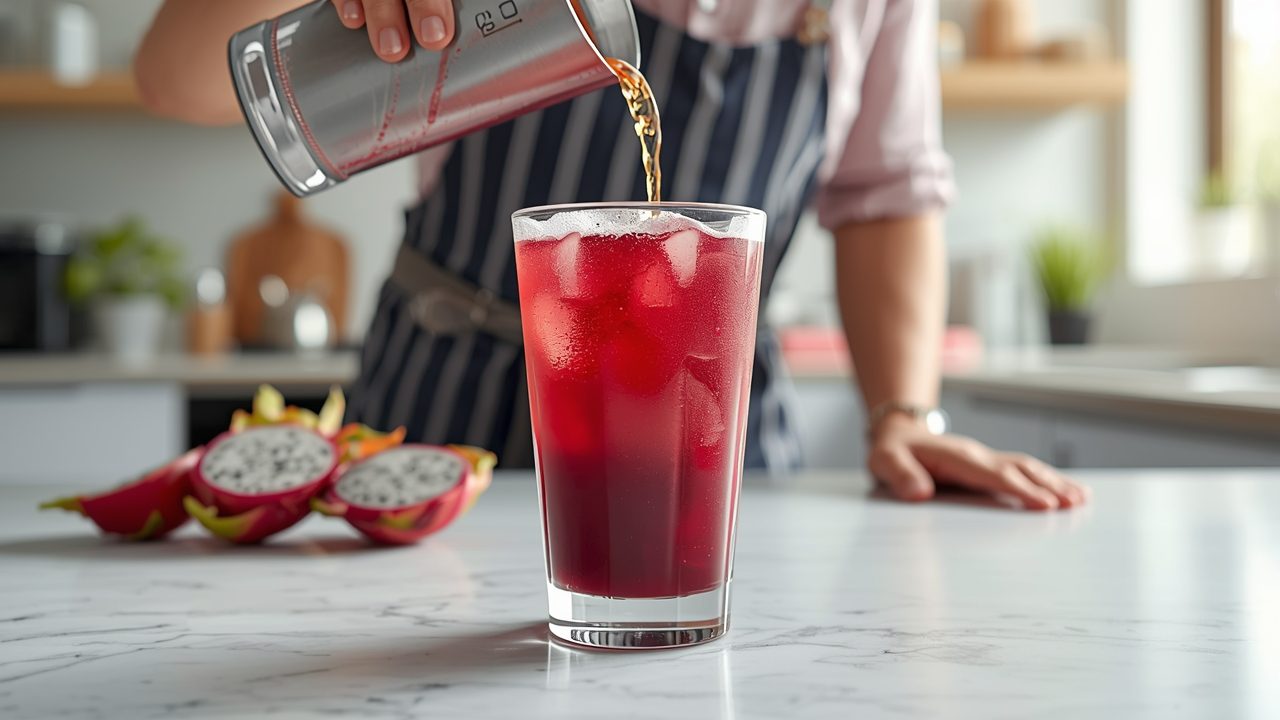
Step 1: Prepare the Dragon Fruit
Cut the dragon fruit in half and scoop out the flesh with a large spoon, discarding the inedible pink skin. Chop the flesh into rough 1-inch cubes to help it break down faster during cooking. Look for a ripe dragon fruit that gives slightly when pressed—too firm means it’s underripe and will lack flavor.
Step 2: Combine Ingredients
Add the cubed dragon fruit, sugar, water, and lemon juice to a medium saucepan and stir to combine. Don’t worry if the mixture looks grainy at this point—the sugar will completely dissolve during heating. Using a saucepan with a heavy bottom prevents scorching, which can give your syrup an off-flavor.
Step 3: Bring to a Simmer
Place the saucepan over medium heat and bring the mixture to a gentle simmer, stirring occasionally to help dissolve the sugar. Once it reaches a simmer, reduce the heat to medium-low. You want bubbles gently breaking the surface but not a rolling boil, which can break down the fruit’s delicate flavor compounds.
Step 4: Cook and Reduce
Simmer the mixture uncovered for 15-20 minutes, stirring occasionally to prevent sticking. The dragon fruit will break down completely, and the liquid will reduce slightly, becoming more concentrated. You’ll know it’s ready when the syrup coats the back of a spoon and the volume has reduced by about 25%.
Step 5: Strain the Syrup
Remove from heat and let cool for 5 minutes. Pour the mixture through a fine-mesh strainer into a bowl, pressing gently with a rubber spatula to extract all the liquid. Don’t press too hard or you’ll push solids through that will cloud your syrup. The strained syrup should be clear and vibrant pink.
Step 6: Cool and Store
Allow the strained syrup to cool completely to room temperature (about 30 minutes). Transfer to a clean glass bottle or jar with a tight-fitting lid and refrigerate. The syrup will thicken slightly as it cools to the perfect pouring consistency.
🔥 Pro Tips from My Kitchen
- For more intense flavor, add the optional vanilla extract after straining when the syrup is still warm but not hot.
- If you want a thicker syrup, simmer for an additional 5-7 minutes—I’ve found this works better for coffee drinks.
- The tiny black dragon fruit seeds are edible and add a nice visual element—you can skip straining if you prefer their texture.
- For maximum color extraction, gently mash the fruit pieces during simmering with a potato masher or fork.
Dragon Fruit Syrup Nutrition Facts
This homemade dragon fruit syrup contains significantly fewer calories and less sugar than most commercial versions, which often add corn syrup and preservatives. Below is the nutrition breakdown per tablespoon serving (typical amount for flavoring a beverage).
| Nutrient | Per Serving (1 Tbsp) |
|---|---|
| Calories | 38 kcal |
| Total Fat | 0g |
| Carbohydrates | 9.8g |
| Sugar | 9.5g |
| Protein | 0.1g |
| Sodium | 1mg |
Nutrition values will vary depending on the exact size of your dragon fruit and how concentrated you make your syrup. The primary caloric content comes from the sugar, which is necessary for both preservation and achieving the proper syrupy consistency.
How to Make Dragon Fruit Syrup Healthier
While traditional dragon fruit syrup is essentially a sugar solution with fruit flavor, I’ve extensively tested several healthier versions that maintain the beautiful color and most of the flavor profile while reducing calories.
- Cut calories by 40%: Replace half the sugar (½ cup) with monk fruit sweetener or allulose, which have zero calories but dissolve like sugar.
- Reduce sugar: Use ¾ cup sugar instead of 1 cup and add ¼ teaspoon of pure stevia extract to maintain sweetness level.
- Boost nutrition: Add 1 tablespoon of chia seeds after cooking for added fiber and omega-3s; they’ll plump in the warm syrup.
- Make it diabetic-friendly: Substitute the entire cup of sugar with allulose and add ¼ teaspoon xanthan gum while cooking to maintain thickness.
- Add antioxidants: Toss in 1 tablespoon of goji berries during simmering for added nutrients and a deeper red color.
- Natural preservation: Add an additional tablespoon of lemon juice to reduce the need for sugar as a preservative.
I personally prefer the half monk fruit/half sugar version for everyday use. The taste is nearly identical to the original, though I find the mouthfeel is slightly less rich. For diabetic family members, I make the all-allulose version, which they find satisfying even though it lacks some of the body of traditional syrup.
Essential Tools for Perfect Dragon Fruit Syrup
1. Fine Mesh Strainer – Game Changer
Fine Mesh Strainer Set with 3 Sizes
After making dozens of fruit syrups, I’ve found that a quality fine-mesh strainer makes all the difference in achieving crystal-clear results. This set gives you three different sizes, perfect for both small and large batches of dragon fruit syrup. The fine mesh catches even the tiniest dragon fruit seeds while letting all the flavorful liquid pass through without clouding.
2. Glass Bottles – Authentic Storage
Glass Syrup Bottles with Pour Spouts
Store your beautiful dragon fruit syrup in these professional-quality glass bottles that showcase its vibrant pink color while making precise pouring easy. I’ve tested numerous storage options, and these bottles maintain flavor integrity better than plastic and prevent leaking or dripping. One 16oz bottle perfectly holds a single batch of this recipe.
3. Digital Kitchen Thermometer – Professional Results
Instant Read Digital Thermometer
For absolutely consistent results every time, I monitor my syrup temperature with this instant-read thermometer. The ideal finishing temperature for dragon fruit syrup is 215°F (102°C), which gives you perfect thickness without risk of crystallization. This small investment eliminated all my early syrup failures from under or overcooking.
4 Mistakes That Ruin Dragon Fruit Syrup (And How to Fix Them)
Mistake #1: Boiling Too Vigorously
The Problem: High heat breaks down the delicate flavor compounds in dragon fruit and can cause the syrup to become cloudy. I’ve seen many first-timers crank the heat to speed up the process, resulting in a dull-tasting syrup.
The Fix: Always maintain a gentle simmer (small bubbles breaking the surface) rather than a rolling boil. Patience yields a clearer, more flavorful syrup with vibrant color.
Mistake #2: Under-reducing the Syrup
The Problem: Not cooking the syrup long enough results in a thin, watery consistency that doesn’t properly coat drinks or desserts. I’ve made this mistake myself when rushing.
The Fix: Simmer until the syrup coats the back of a spoon and has reduced by approximately 25% in volume. For precise results, cook until it reaches 215°F (102°C) on a candy thermometer.
Mistake #3: Using White-Fleshed Dragon Fruit
The Problem: White-fleshed dragon fruit produces a nearly colorless syrup that lacks visual appeal, even though the flavor is similar. Many recipe testers are disappointed when their syrup comes out clear instead of pink.
The Fix: Always select red-fleshed dragon fruit varieties (often labeled as “red pitaya”). If only white-fleshed fruit is available, add 2-3 fresh or frozen raspberries during cooking for natural pink color.
Mistake #4: Over-pressing Solids When Straining
The Problem: Pressing too hard on the fruit solids forces pulp through the strainer, creating a cloudy syrup that doesn’t look professional. This was my biggest struggle when I first started making fruit syrups.
The Fix: Strain with gravity doing most of the work, using gentle pressure with a silicone spatula. For ultra-clear syrup, strain twice—first through a regular strainer, then through cheesecloth or a coffee filter.
Storing Your Dragon Fruit Syrup (Make-Ahead Guide)
One of the best things about homemade dragon fruit syrup is how well it keeps, making it perfect for advance preparation. After making this syrup dozens of times, I’ve perfected the storage technique to maintain both flavor and that stunning pink color.
For short-term storage, transfer the cooled syrup to a clean glass bottle or jar with a tight-fitting lid and refrigerate. The syrup will stay fresh for up to 3 weeks in the refrigerator. I’ve found that adding that tablespoon of lemon juice is critical for preserving both color and extending shelf life, as it prevents oxidation.
For longer storage, you can freeze dragon fruit syrup in ice cube trays, then transfer the frozen cubes to a freezer bag. Each cube is approximately 1 tablespoon, making portioning easy. Frozen syrup maintains quality for up to 3 months and thaws quickly at room temperature or can be added directly to hot beverages.
If you want to prep components in advance, you can cube the dragon fruit and freeze it for up to 6 months, then make fresh syrup whenever needed. This is actually my preferred method when dragon fruit is on sale—I’ll buy extra, prep and freeze it, then make syrup in small batches.
You’ll know the syrup has turned if you notice any cloudiness, off-smell, or mold growth. In my experience, homemade dragon fruit syrup rarely spoils before you use it up, especially if proper sanitation is followed during preparation.
Dragon Fruit Syrup Recipe FAQs
Can I make dragon fruit syrup ahead of time?
Yes, dragon fruit syrup is perfect for make-ahead preparation. It will keep in the refrigerator for up to 3 weeks in a clean, airtight container. The lemon juice in the recipe acts as a natural preservative, helping maintain both flavor and color during storage. For longer storage, freeze the syrup in ice cube trays, then transfer to freezer bags for up to 3 months. I personally make a double batch every month to have on hand for unexpected guests.
What’s the difference between homemade dragon fruit syrup and the store version?
Homemade dragon fruit syrup typically has a fresher, more pronounced fruit flavor compared to commercial versions. Store-bought syrups often contain preservatives, artificial colors, and stabilizers that can dull the natural fruit taste. The texture is very similar, though homemade tends to be slightly less viscous. The biggest advantage is cost—commercial dragon fruit syrup runs about $4.95 for 12oz, while homemade costs approximately $1.50 for the same amount. I prefer homemade for special drinks and desserts where the fresh flavor really matters.
Can I make dragon fruit syrup without fresh dragon fruit?
Yes, frozen dragon fruit works perfectly as a substitute for fresh. Use the same quantity (about 12-14oz) and there’s no need to fully thaw it before cooking. In a pinch, you can also use dragon fruit powder (2-3 tablespoons) mixed with the sugar and water, though the flavor won’t be quite as vibrant. I’ve found that freeze-dried dragon fruit, rehydrated in warm water for 10 minutes, also creates a good result. Check our guide to fruit alternatives for more substitution ideas.
How do I make dragon fruit syrup less sweet/fewer calories?
To reduce sweetness and calories, replace half the sugar (½ cup) with monk fruit sweetener or allulose, cutting calories by approximately 40%. For a fully sugar-free version, use 1 cup allulose plus ¼ teaspoon xanthan gum to maintain proper syrup thickness. The taste will be slightly different—less rich in mouthfeel but still flavorful. I regularly make the half-sugar version for everyday use, saving the full-sugar recipe for special occasions and gifting.
Why doesn’t my dragon fruit syrup taste like store-bought?
The most common reasons for flavor differences include using white-fleshed dragon fruit instead of red varieties, under-reducing the syrup (not simmering long enough), or using underripe fruit. Commercial syrups often include flavor enhancers and concentrates to intensify the subtle dragon fruit taste. To troubleshoot, try adding ¼ teaspoon of vanilla extract and a tiny pinch of salt to enhance natural flavors. Quality of ingredients makes a huge difference—make sure your dragon fruit is ripe (slightly soft when pressed) for the best flavor profile. Learn more about selecting perfectly ripe fruits for syrups here.
Can I can or preserve dragon fruit syrup for pantry storage?
Yes, dragon fruit syrup can be preserved through water bath canning for shelf-stable storage up to 12 months. Process filled, sealed jars in boiling water for 10 minutes (adjust for altitude if needed). However, extended heat processing may slightly dull the vibrant pink color. For best visual and flavor results, I recommend refrigerator or freezer storage instead of canning unless long-term pantry storage is essential.
Final Thoughts on Making Dragon Fruit Syrup at Home
After making dragon fruit syrup countless times in my own kitchen, I’m still amazed by how simple it is to create something that looks and tastes so special. This homemade dragon fruit syrup delivers the exact same vibrant pink color and tropical flavor as premium store versions, but at a fraction of the cost—just $1.50 compared to nearly $5 for the same amount. The 25-minute time investment yields enough syrup to flavor dozens of drinks or desserts.
The beauty of mastering homemade dragon fruit syrup is how it instantly elevates everyday beverages. A splash in sparkling water, iced tea, or lemonade creates a visually stunning drink that tastes as good as it looks. Even my most particular friends can’t tell the difference between my homemade version and expensive commercial syrups.
I make a batch of dragon fruit syrup at least twice a month now, experimenting with different sweetener combinations and flavor pairings. My family especially loves it in weekend morning lemonades, and it’s become my signature hostess gift in a pretty bottle with serving suggestions.
If you tried this dragon fruit syrup recipe, please leave a star rating below and let me know how it turned out in the comments! I read every single one and love hearing about your dragon fruit syrup creations.
Save this recipe by pinning it to Pinterest or bookmarking this page – you’ll want to make dragon fruit syrup again and again!
For more exotic homemade syrups, check out our complete tropical syrup collection featuring passion fruit, guava, and lychee varieties that pair beautifully with this dragon fruit syrup.


